Humanize From Discovery Institute's Center on Human Exceptionalism
Category

Uncategorized

lost-man-in-the-middle-of-the-forest-430309368-stockpack-adobestock
Lost man in the middle of the forest.
Image Credit: pintxoman - Adobe Stock

New York Times Story Features “Tree Rights”

I recently wrote critically about a Quebec town that granted “rights to trees.” These include the rights “to life, to natural growth, to integrity, and to regeneration.” The new law has gotten a lot of media attention. Now, the New York Times has entered the fray, publishing a relatively objective story about the resolution and the nature rights movement’s history, with only one critic quoted — yours truly, from my NRO article (I was not interviewed). There is more to say about this than I included in my original post. So, let’s dig a little into the Times’ story: The small town of Terrasse-Vaudreuil, Quebec, was carved out of the forest about 75 years ago. But until recently, the trees Read More ›

group-of-war-refugees-walking-in-cornfield-syrian-refugees-c-379881175-stockpack-adobestock
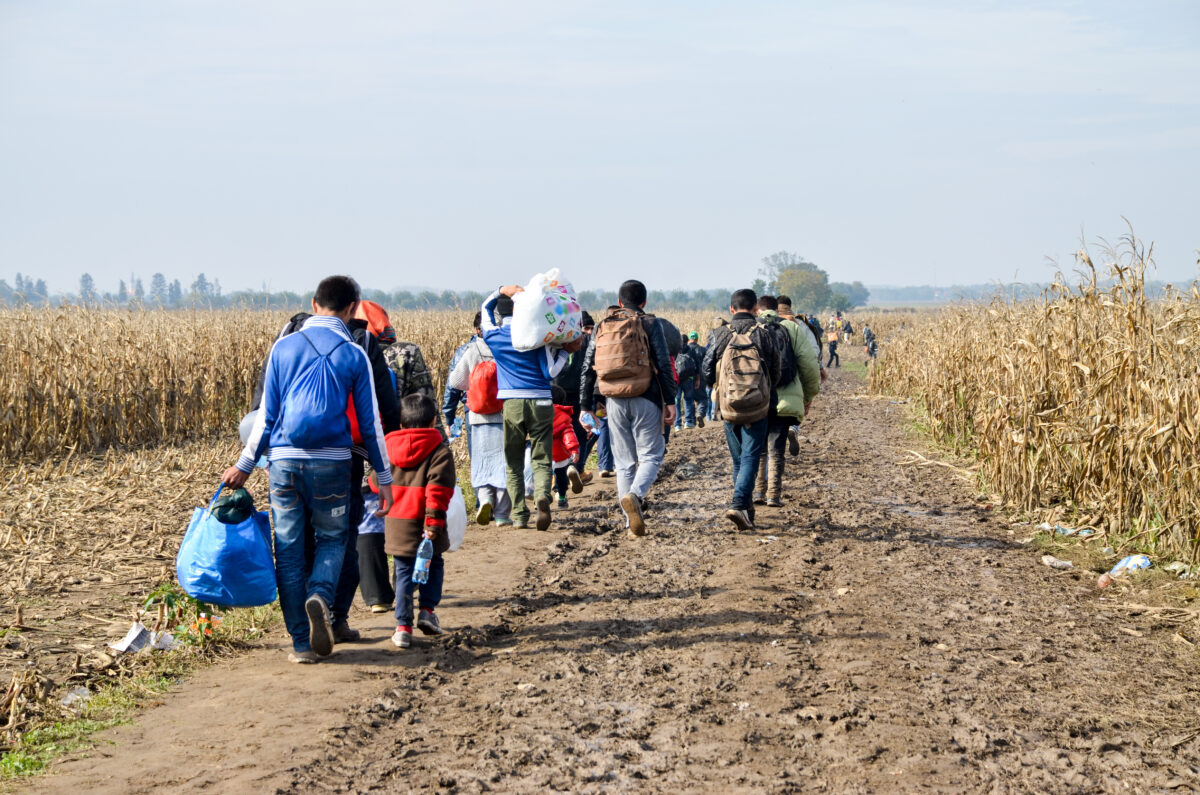
Group of War Refugees walking in cornfield. Syrian refugees crossing border to reach EU. Iraqi and Afghans. Balkans Route. Migrants on their way to European Union. Large group of people immigrate
Image Credit: Ajdin Kamber - Adobe Stock

Medical Journal Supports Unlimited Migration

The Lancet just published an editorial that essentially supports unlimited migration — although it doesn’t use that term — and makes no distinction between legal and illegal immigration. From, “Migration a Reality, Not an Emergency:” Migration is among the oldest facts of human life, yet it is treated as one of the newest emergencies: anti-immigration protests have intensified in the UK and immigration raids have swept US cities. As we mark World Refugee Day, the follow-up Review to the 2018 UCL-Lancet Commission on Migration and Health, published in this issue, renews the Commission’s call for action and asks whether, in a climate shaped by fear, evidence can still drive policy. The editorial ignores international and national laws. In the United Read More ›

hdr-image-of-houses-of-parliament-stockpack-adobe-stock-44968288-stockpack-adobestock
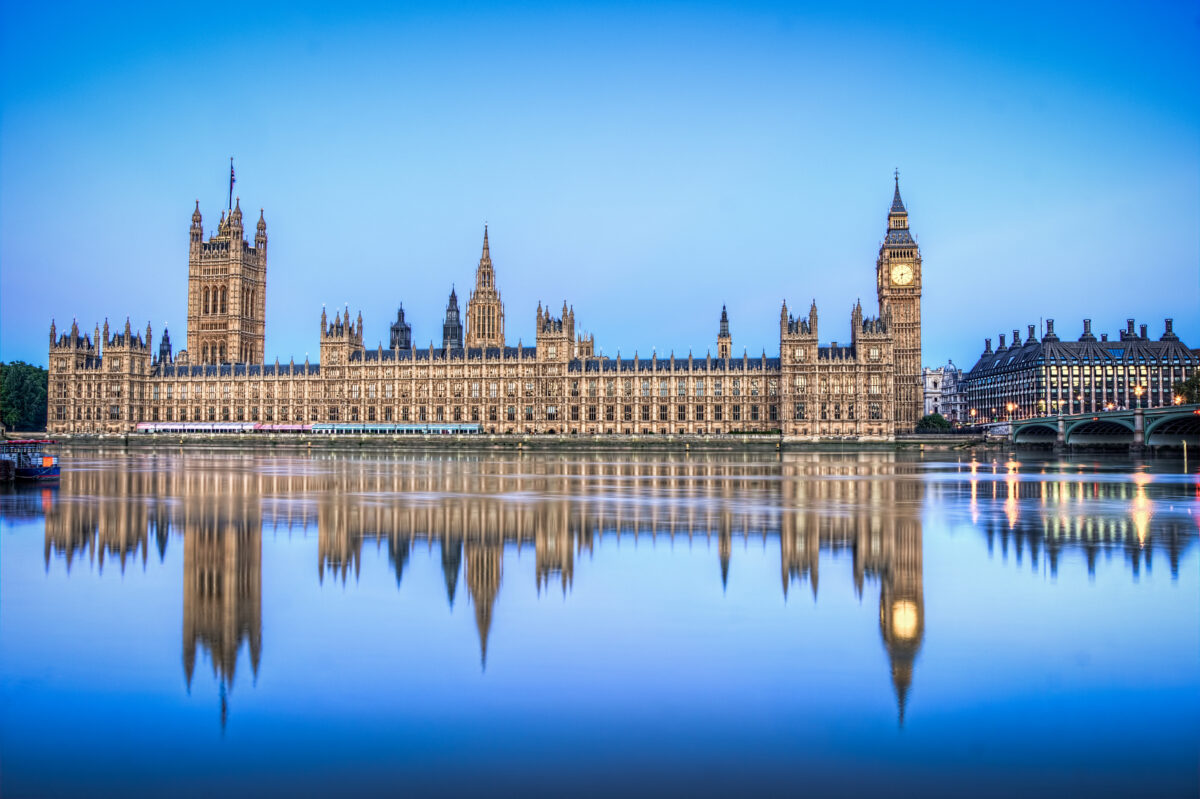
Hdr image of Houses of parliament
Image Credit: olavs - Adobe Stock

“Nature’s Rights” Bill Presented in U.K. Parliament

The “nature rights” movement continues to advance. Now, a bill has been presented for consideration in the U.K. House of Lords by a member of the Green Party to redefine “nature” as a “subject” with enforceable “rights.”

The “Nature’s Rights Bill 2026” is as radical as it is long. It recognizes “Nature” (capital N) as “a legal subject and rights bearing entity” that essentially includes everything that exists on the planet:

“Nature” means the interconnected community of living organisms, ecosystems, habitats, species, landscapes, seascapes, geological processes, waters, soils, atmosphere, climate systems and natural cycles, including the evolutionary and regenerative dynamics of life on Earth.

The putative rights of Nature are all-encompassing:

(1) Nature has the following inherent rights—
(a) the right to exist, persist and evolve;
(b) the right to maintain and regenerate ecological integrity;
(c) the right to restoration and regeneration where harm has occurred;
(d) the right to be free from pollution, contamination and degradation that threatens ecological integrity, resilience or health;
(e) the right to maintain natural cycles, functions and processes, including hydrological, climatic, geological, soil, nutrient, reproductive, evolutionary and ecological processes;
(f) the right to maintain ecological connectivity, diversity, abundance and resilience; and
(g) the right to exist, regenerate and flourish within safe ecological limits, including Planetary Boundaries and Earth System Boundaries so far as applicable.

Read More ›
YouTube Episode Thumbnails under 2 MB (17)

I Helped Hijack the Women’s Movement: How Roe v. Wade Was Sold to America with Sue Ellen Browder

Did the women’s movement get hijacked? Former Cosmopolitan writer and Subverted author Sue Ellen Browder says yes, and she says she helped do it. In this eye-opening conversation, Sue shares what she witnessed inside Cosmopolitan during the height of the sexual revolution, how media narratives helped reshape American views on sex, marriage, motherhood, and abortion, and why she believes the women’s movement became fused with abortion politics. We discuss the influence of figures such as Betty Friedan, Larry Lader, Simone de Beauvoir, and Kate Millett, the origins of modern feminism, the role of propaganda in shaping public opinion, and what Sue uncovered in her research into Roe v. Wade. Was the sexual revolution an organic cultural shift or a carefully Read More ›

tourist-standing-in-an-ice-cave-in-vatnajokull-glacier-icela-301077248-stockpack-adobestock
Tourist standing in an ice cave in Vatnajökull glacier Iceland
Image Credit: jon - Adobe Stock

“Glaciers Are More Than Human Beings”

Environmentalism is growing increasingly radical and irrational, epitomized by the “nature rights” movement that seeks to declare geological features, flora, and fauna to be rights-bearing beings. Nature rights activists proselytize neoearth religion. Advocates often invoke mystical beliefs of indigenous peoples as justifications for their advocacy, including the invocation of “Pachamama,” the Incan earth goddess. Some activists even claim that the earth is alive. Now, an article in the environmental journal PLOS Climate claims that “glaciers are more than human beings” — what I guess we could call glacier exceptionalism: In the context of accelerating climate change and widespread ecological degradation, there is growing academic and legal interest in reframing natural entities—such as glaciers—as more-than-human beings. This conceptual turn challenges anthropocentric Read More ›

YouTube Thumbnails, under 2 MB (4)

Has Feminism Betrayed Motherhood? with Kimberly Cook

Has modern feminism liberated women or has it quietly turned women against their own motherhood? In this episode of Bioethics Babe, I sit down with Kimberly Cook, author of Motherhood Redeemed: How Radical Feminism Betrayed Maternal Love, to examine one of the most controversial questions of our time: Has feminism betrayed motherhood? Kimberly shares her powerful personal journey from embracing modern feminist ideology to rediscovering the beauty of femininity, fertility, and maternal love through her Christian conversion. Together, we explore: This conversation goes beyond politics. It confronts the deeper spiritual question: What happens when women are taught to see their fertility as a curse rather than a gift? From birth control and abortion to the breakdown of the family and Read More ›

iberian-pigs-in-the-nature-eating-stockpack-adobe-stock-245387466-stockpack-adobestock
Iberian pigs in the nature eating
Image Credit: Sergio - Adobe Stock

Animal Welfare vs. Animal Rights

Vox has published a piece that expresses some surprise at the fact that many conservatives and MAGA (not the same thing) support animal welfare. The writer discusses, among other things, RFK Jr.’s recently announced plan to phase out all government support for animal research:

Over the past decade, it’s been fascinating to see the animal rights movement — which is mostly comprised of left-leaning activists — reckon with the fact that an administration they largely oppose has taken some actions to help animals. Especially on the animal experimentation issue, it’s led to a “diverse, sometimes-uneasy coalition of animal welfare advocates, science reformers, and far-right political figures,” as journalist Rachel Fobar put it for Vox last year. But that coalition, with all its contradictions and disagreements, represents what little hope there is to prevent animal cruelty at the federal level.

The article makes the common media mistake of conflating animal welfare and animal rights. But the two ideological approaches are not the same at all.

Animal rights is an ideology that sees no moral difference between humans and other animals. It claims that rights come from the ability to suffer (“painience”). Since a cow can feel pain, bovines are equal to humans, and cattle ranching is akin to slavery. In other words, animals have the right to never be used instrumentally for any purpose no matter how much it might benefit humankind. Or, as PETA’s leader Ingrid Newkirk infamously once put it, “A rat, is a pig, is a dog, is a boy.”

Read More ›
Episode 13 thumbnail

Candace Owens v. Erika Kirk: The Cost of Conspiracy and the Ethics of Influence with Simone Rizkallah

What happens when influence is exercised without restraint and conspiracy replaces evidence? In today’s episode of Bioethics Babe, I’m joined by Simone Rizkalla, Catholic educator, speaker, writer, and host of the Beyond Rome podcast to examine the controversy surrounding Candace Owens and Erika Kirk, not as internet drama, but as a serious ethical case study. This conversation explores the cost of conspiracy thinking, the moral responsibilities that come with large platforms, and how misinformation, reputational harm, and reckless speculation threaten human dignity, truth, and community trust in the digital age. We ask hard questions: This episode goes beyond the culture war to examine the bioethics of influence, the psychology of conspiracy narratives, and what justice, accountability, and repentance look like Read More ›

a-close-up-of-a-nurse-adjusting-an-iv-drip-for-a-patient-in-772232855-stockpack-adobestock
A close-up of a nurse adjusting an IV drip for a patient in a hospital bed with the rest of the hospital room blurred in the background
Image Credit: Thanapipat - Adobe Stock

Finally, a Suicide Prevention Organization Opposes Assisted Suicide

One of my greatest frustrations has been the general silence of suicide prevention organizations in the face of the legalization of assisted suicide in various jurisdictions. To me, this failure has been an abdication of such groups’ core responsibility because it ignores some suicides, does not oppose facilitation of the suicides of the ill and disabled, and does not grapple with the adverse impact that assisted suicide advocacy can have on suicidal people generally.

That silence has now ended. The International Association for Suicide Prevention just issued a (not quite strong enough) position paper that (equivocally) opposes legalization. From, the “IASP Position Statement on Assisted Suicide and Euthanasia (2025)” (my emphasis):

At the present time, countries and jurisdictions are increasingly legalising and regulating assisted suicide, euthanasia, or both practices (sometimes called “Medically Assisted Death,” “Physician Assisted Death,” “Medical Aid in Dying” or similar terms). Assisted suicide is when a medical practitioner provides a patient who has asked to die with the means, usually prescription drugs, for the patient to self-administer to end their own life. Euthanasia is when the medical practitioner directly administers the lethal substance.

There is a strong potential for overlap or equivalence between what we consider to be suicide and euthanasia and assisted suicide (EaAS), particularly when EaAS is provided not at the end of life and instead to those with chronic conditions for whom death is not imminent.

Read More ›
hospital-care-team-hastily-wheeling-patient-on-medical-gurne-542392599-stockpack-adobestock
Hospital care team hastily wheeling patient on medical gurney at emergency department of hospital, back view. Work of emergency medical team
Image Credit: Peakstock - Adobe Stock

Assisted-Suicide Slippery Slope Keeps Slip-Sliding Away

When assisted suicide is first proposed for legalization, we are assured by death activists that strict guidelines will protect against abuse. But they don’t mean it. Once the laws pass, the supposed protections — which are always flaccid to begin with — are soon redefined by activists and the media as “barriers,” et voila, the laws are soon loosened. It’s all a con, but people seem to fall for it every time.

This pattern can be seen vividly playing out in Victoria, Australia. The state was the first in that country to legalize assisted suicide, and now the government is making more people eligible for legally hastened death. From the premier’s announcement:

The new legislation will remove unnecessary barriers to accessing VAD, improve clarity for practitioners, strengthen safety measurements and make the system fairer and more compassionate.

See what I mean? “Strengthen safety,” (!!!) and “fairer and more compassionate,” really just means more people can become dead much sooner.

Read More ›