Humanize From Discovery Institute's Center on Human Exceptionalism
Topic

rights of nature

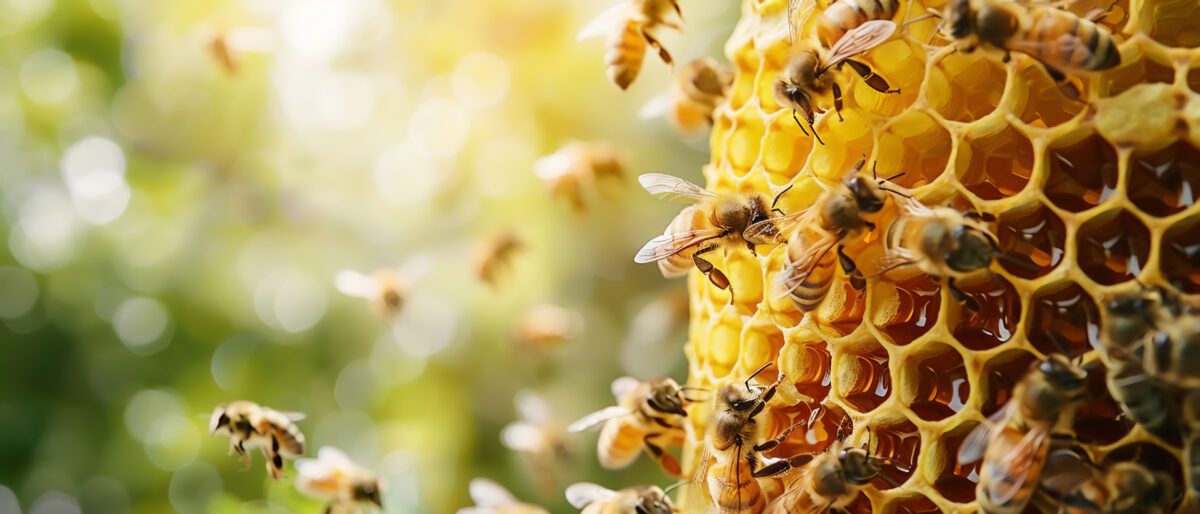
visualize-a-honeycomb-sphere-with-golden-honey-and-busy-bees-826488003-stockpack-adobestock
Visualize a honeycomb sphere with golden honey and busy bees Highlight its sweet productivity
Image Credit: Lalida - Adobe Stock

Bees Granted Rights in Peru

The rights of nature movement has been more successful than the animal rights movement. Geological features such as rivers, but few animals, have been granted rights. But now in a merger of sorts of these worldviews, stingless bees have been granted rights in two local ordinances in Peru. From the Smithsonian magazine story: Under the new laws, stingless bees now have the fundamental right to exist and flourish in a healthy environment, without pollution, habitat loss, climate change, human activity or other threats getting in the way of their survival. Humans can also file lawsuits on the insects’ behalf. So, in essence, bees have been granted a right to life. PETA must be dancing a jig. Also, notice the global warming Read More ›

big-ben-stockpack-adobe-stock-219460681-stockpack-adobestock
Big Ben
Image Credit: Alyson - Adobe Stock

Totalitarian “Nature Rights” Legislation in U.K. House of Lords

A Green member of the House of Lords plans to introduce “nature rights” legislation. Not only would — basically everything — have rights, but these supposed liberties could be enforced against “individuals.” The authoritarian possibilities are unquantifiable.

First, “nature’s” definition is so broad it includes just about everything in existence. From Draft 8 of the Nature Rights Act of 2025:

“Nature” means the interconnected community of living organisms, ecosystems, geological processes, and natural cycles, including all species, habitats, landscapes, waters, soils, the atmosphere, and the evolutionary and regenerative dynamics of life on Earth.

Anything in the world missing from that definition? Not that I can see. Thus, everything on earth — including the air — would be deemed a “legal person.” And notice that “nature” is personalized with a capital N:

Recognition of Nature as a Legal Person:
a. Nature is recognised as a legal person and subject of law.
b. The rights of Nature established by this Act shall vest in Nature as a single legal entity.
c. These rights shall be enforceable collectively on behalf of Nature to prevent fragmentation of legal claims.

Read More ›
forest-canopy-with-many-different-tree-species-palm-trees-an-468459030-stockpack-adobestock
Forest canopy with many different tree species, palm trees and flowering trees with yellow flowers: the amazon forest seen from above
Image Credit: pangamedia - Adobe Stock

NYU Law School Clinic Attempting to Obtain Copyright for a Forest

As I have noted here before, NYU Law School’s radical MOTH (More Than Human Life) program embraces neo-earth mysticism as part of its efforts to promote “nature rights.” Here’s the latest example. MOTH participants are seeking to force the Ecuadorian Copyright Office to grant a copyright to a forest as the supposed co-composer of music called Song of the Cedars. From “Giving Back to Nature,” published on the MOTH website: The aim of the song and its accompanying legal petition is to recognize—legally and culturally—the inextricable agency and participation of the natural world in the making of art. The song could not have been made without Los Cedros, legally and philosophically justifying the effort to acknowledge the forest’s “moral authorship” Read More ›

white-tailed-deer-doe-and-fawn-near-city-park-in-wisconsin-s-392151631-stockpack-adobestock
White tailed deer, doe and fawn near city park in Wisconsin.
Image Credit: Jitka - Adobe Stock

Wisconsin Democrats Push “Rights of Nature” Resolution

A few months ago, I posted about a Republican proposal in Wisconsin to have the state legally preempt local ordinances that grant “rights” to nature. I predicted that, if the bill passed, the Democratic governor would veto it because the nature rights movement is quickly entering the progressive mainstream. Well, no veto yet, since the bill hasn’t passed. But some Democratic legislators have reacted against the legislation by proposing a joint resolution in favor of granting “inherent rights to nature.” Par for the course, they bow to the supposedly superior environmental wisdom of indigenous people. From the proposed joint resolution: Whereas, Indigenous communities…have lived in respectful relationships with the land that is now Wisconsin for thousands of years, and their Read More ›

tuscany-hills-stockpack-adobe-stock-86573887-stockpack-adobestock
Tuscany hills
Image Credit: ZoomTeam - Adobe Stock

The Hills Are Alive With The, Well, Approval of Leftist Politicians

The following article was originally published at Badger Institute by Mark Lisheron. Lisheron describes the current battle for and against nature rights, specifically in the United States, and quotes Senior Fellow and Chair of the Center on Human Exceptionalism, Wesley J. Smith. If a tree falls in the forest, can it sue for physical, mental and emotional harm? Not in Wisconsin, and two state lawmakers want to make sure the door isn’t opened to the possibility. State Rep. Joy Goeben (R-Hobar) and state Sen. Steve Nass (R-Whitewater) have introduced a bill that “prohibits a city, village, town, or country” from enacting a “rights of nature ordinance” that confers “legal rights to a natural resource to exist, to be protected against Read More ›

top-down-view-of-capitol-building-and-park-in-madison-wiscon-366181273-stockpack-adobestock
Top down view of Capitol Building and park in Madison Wisconsin
Image Credit: marchello74 - Adobe Stock

Wisconsin Bill Pending to Ban “Nature Rights” Ordinances

The nature rights movement’s greatest strength isn’t its crackers ideology — i.e., geological features are living persons with the right to “exist, persist, maintain and regenerate its vital cycles, structure, functions and its processes in evolution,” and rivers have the “right to flow.” Rather, it is the lack of seriousness with which the movement is taken by expected opponents precisely because it is so crackers. That eye rolling condescension has allowed activists to further their cause almost unimpeded to the point nature rights is the law of several countries and under serious consideration for implementation at the highest level of international governance. Nature rights advocacy is now being funded by the National Geographic Society and its unscientific ideology has been Read More ›

old-buddha-head-trapped-in-bodhi-tree-roots-in-wat-mahathat-317760790-stockpack-adobestock
Old buddha head trapped in bodhi tree roots in Wat Mahathat Temple, Ayutthaya. Bangkok province, Thailand
Image Credit: Andrii Vergeles - Adobe Stock

Academia Embraces the Unscientific Earth Religion of “Nature Rights”

The “nature rights” movement has infused environmentalism with unscientific mysticism. In spite of — or perhaps because of — that, its influence continues to grow as geological features like rivers, glaciers, and a mountain have been declared in law to be living persons endowed with rights. Adding to that threat, elite institutions such as law societies, science and medical journals, and grandees at the U.N. are increasingly embracing the cause. In the latest example, Cambridge University’s new policy journal Public Humanities will devote an issue to promoting the rights of nature. From the call for papers: We urgently need to change the way we relate to nature. One of the ways to do so is to consider nature as a Read More ›

PressconferenceVolkerTurkAssistantHighCommissionerU
Image by EU2018BG Bulgarian Presidency at Wikimedia Commons: https://commons.wikimedia.org/wiki/File:Press_conference_Volker_Turk,_Assistant_High_Commissioner,_UNHCR_(39178716474).jpg

U.N. Human Rights Chief Pushes Nature Rights

How radical has the U.N. become? This radical. Volker Türk, the United Nations’ High Commissioner for Human Rights, stated in a recent speech at Oxford University that nature rights are equivalent to human rights. First, he briefly focused on our obligations as humans to treat the environment responsibly. From the Scoop World transcript: We have a responsibility to treat our planet with respect; to protect its glaciers and forests; to support the diversity of species on land and in the sea; to keep our rivers and lakes clean; to preserve nature, including ourselves. No argument. That is a core principle of human exceptionalism. But then, Türk denies that this responsibility flows from our exceptionalism, but rather, claims that our understanding Read More ›

eiffel-tower-aerial-view-paris-stockpack-adobe-stock-264549883-stockpack-adobestock
Eiffel Tower aerial view, Paris
Image Credit: saiko3p - Adobe Stock

Council of Paris Wants France to Grant “Rights” to the Seine

Encountering little political resistance, the “nature rights” movement continues its march toward legal and institutional respectability. Now, the Council of Paris has asked the French Parliament to grant legal personhood and “rights” to the river Seine. From the RTL Today story: French authorities want to give legal rights to the River Seine to better defend the world-famous waterway in court and protect its fragile ecosystem, part of a global movement to grant legal personhood to nature. In a resolution adopted on Wednesday, the Paris City Council called on parliament to pass a law granting the Seine legal personhood to enable “an independent guardian authority to defend its rights in court.” “The Seine must be able to defend itself, as a Read More ›

national-geographic-magazines-stockpack-adobe-stock-330570150-stockpack-adobestock
National Geographic Magazines
Image Credit: David K. Marti - Adobe Stock

National Geographic Society to Fund “Nature Rights” Advocacy

The “nature rights” movement has really hit the big time. The National Geographic Society — one of the world’s largest and most influential science organizations — is going to pour money into the movement. From the National Geographic website:

Today, the National Geographic Society, in collaboration with The Alfred Kobacker and Elizabeth Trimbach Fund, are proud to announce For Nature. Announcement of the new program comes in anticipation of the celebration of the International Day for Biological Diversity, May 22). For Nature will support National Geographic Explorer Callie Veelenturf’s vision to advance the Rights of Nature movement and provide funding for ten Explorer projects to advance this work.

The Rights of Nature movement seeks to bring rights-based legal protection to threatened and endangered species and habitats. Under the newly-launched For Nature program, this movement will be further catalyzed and expanded with the help of the Society’s global community of researchers and conservationists, storytelling and education expertise, technology and communications support and elevation opportunities to drive the impact of this work and grow the movement for species and habitat protections.

What are the rights of nature? Don’t let the press release fool you. It isn’t just about endangered species, habitats, or ecosystems. Here’s a frequently deployed definition:

Read More ›