Humanize From Discovery Institute's Center on Human Exceptionalism
Topic

Dementia

empty-room-with-bed-and-comfortable-medical-equipped-in-a-ho-309266419-stockpack-adobestock
Empty room with bed and comfortable medical equipped in a hospital.
Image Credit: Ceballos - Adobe Stock

Canadian Dementia Patient Euthanized at Family’s Request

Euthanasia/assisted suicide “protective guidelines” don’t really protect against abuse. They mostly serve as window dressings to make people comfortable with killing the sick. And soon after legalization, the vaunted protections are redefined by activists and the media as “barriers” to death, which become the pretext for loosening the already slack guidelines. The speed at which that happens varies, but the pattern rarely fails. Here’s an example. In Canada, a person is supposed to explicitly request and consent to being killed by a lethal jab. But a dementia patient was recently euthanized at the request of her family. From the National Post story: A frail women [sic] in her late 80s with dementia received MAID after a family member brought forward Read More ›

nurse-consoling-her-elderly-patient-by-holding-her-hands-sto-264619531-stockpack-adobestock
Nurse consoling her elderly patient by holding her hands
Image Credit: pikselstock - Adobe Stock

Will We Care For or Kill Dementia Patients?

I understand that people are terrified of dementia. Believe me, I get it. My mother died of Alzheimer’s. But I can’t wrap my head around the fact that advocacy for killing/suicide as the answer to the difficulties caused by the condition is becoming ubiquitous. Noted bioethicist and lawyer Thaddeus Mason Pope has written an essay, to be published in an edited volume, on this very issue. It lists eleven ways people can “avoid late-stage dementia,” and almost all involve intentionally ending life. Remember when we were told that advance medical directives are the key to not receiving life-extending treatment one does not want? They are, but that’s not good enough for Pope, because it doesn’t guarantee death: This strategy is Read More ›

close-up-of-hands-stockpack-adobe-stock-392089525-stockpack-adobe_stock
Close-up of hands
Image Credit: Photographee.eu - Adobe Stock

Will We Starve Dementia Patients in Slow Motion?

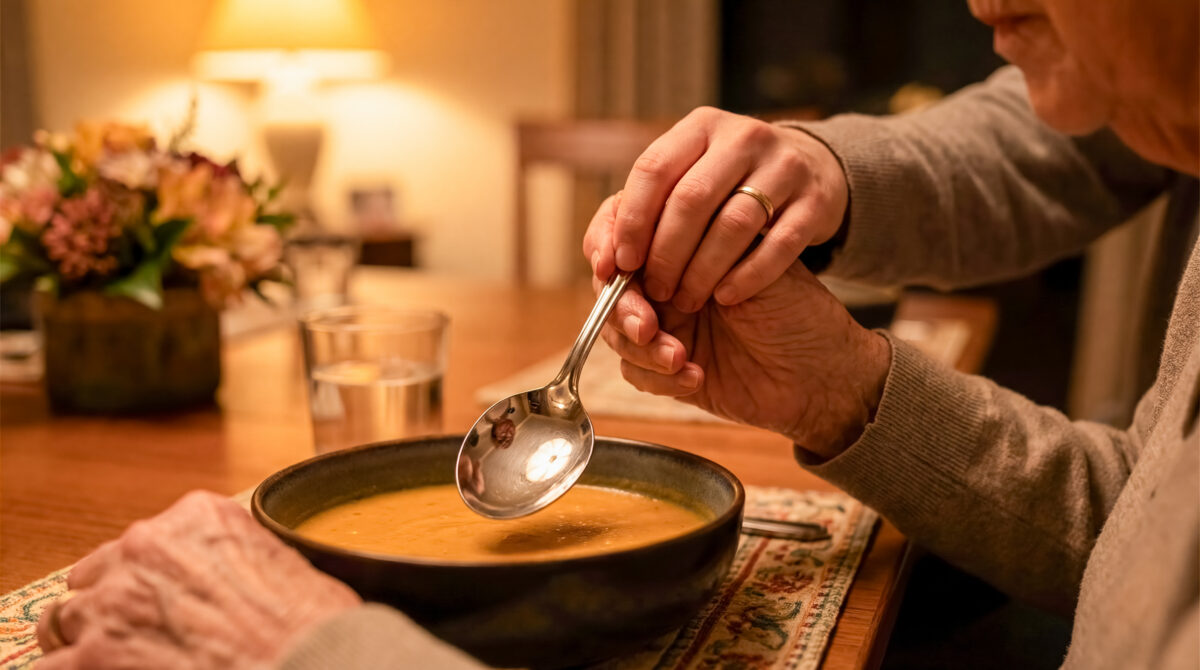
Moves are afoot in bioethics to require caregivers to withhold food and water by mouth from a patient made incompetent by dementia if that patient, while compos mentis, has signed such a request — and even if the patient willingly eats, enjoys meals, or asks for food. It is sometimes called “voluntary stop eating and drinking [VSED] by advance directive,” in the parlance.

I have frequently criticized VSED by directive as inhumane to the patient, cruel to caregivers (as it forces them to starve people to death), and designed to open the door to lethally jabbing those with advanced dementia as the less onerous alternative to their being made to starve to death.

Now, as supposedly some form of compromise, there is a proposal on the table to barely feed — i.e., malnourish — dementia patients who have previously signed such a directive. From, “Mr. Smith Has No Mealtimes,” published in the Journal of Pain and Symptom Management (citations omitted):

Minimal Comfort Feeding (MCF)…is the provision of only enough oral nutrition and hydration to ensure comfort. With MCF, eating and drinking is not scheduled; rather, caretakers offer food and liquids only in response to signs of hunger and thirst. Patients are neither wakened for regular mealtimes nor encouraged to eat or drink. Instead, they are offered frequent, fastidious mouth care, continued social contact, therapeutic touch, sensory distraction, and medications to relieve distress associated with apparent thirst or hunger before being provided with minimal amounts of liquid or food.

Read More ›
lonely-sad-elderly-senior-person-in-wheelchair-adobe-stock
Lonely sad elderly Senior person in wheelchair in nursing home looking out window. Generation AI
Image Credit: Adin - Adobe Stock

Normalizing Assisted Suicide Will Lead to a Duty to Die

Euthanasia isn't really about compassion but fear of decline and a loathing of dependency — and of those experiencing them. That nasty truth has become abundantly clear with a new column published in the Times of London. Read More ›