
Just Another Animal?
Originally published at World- Categories
- Human Exceptionalism
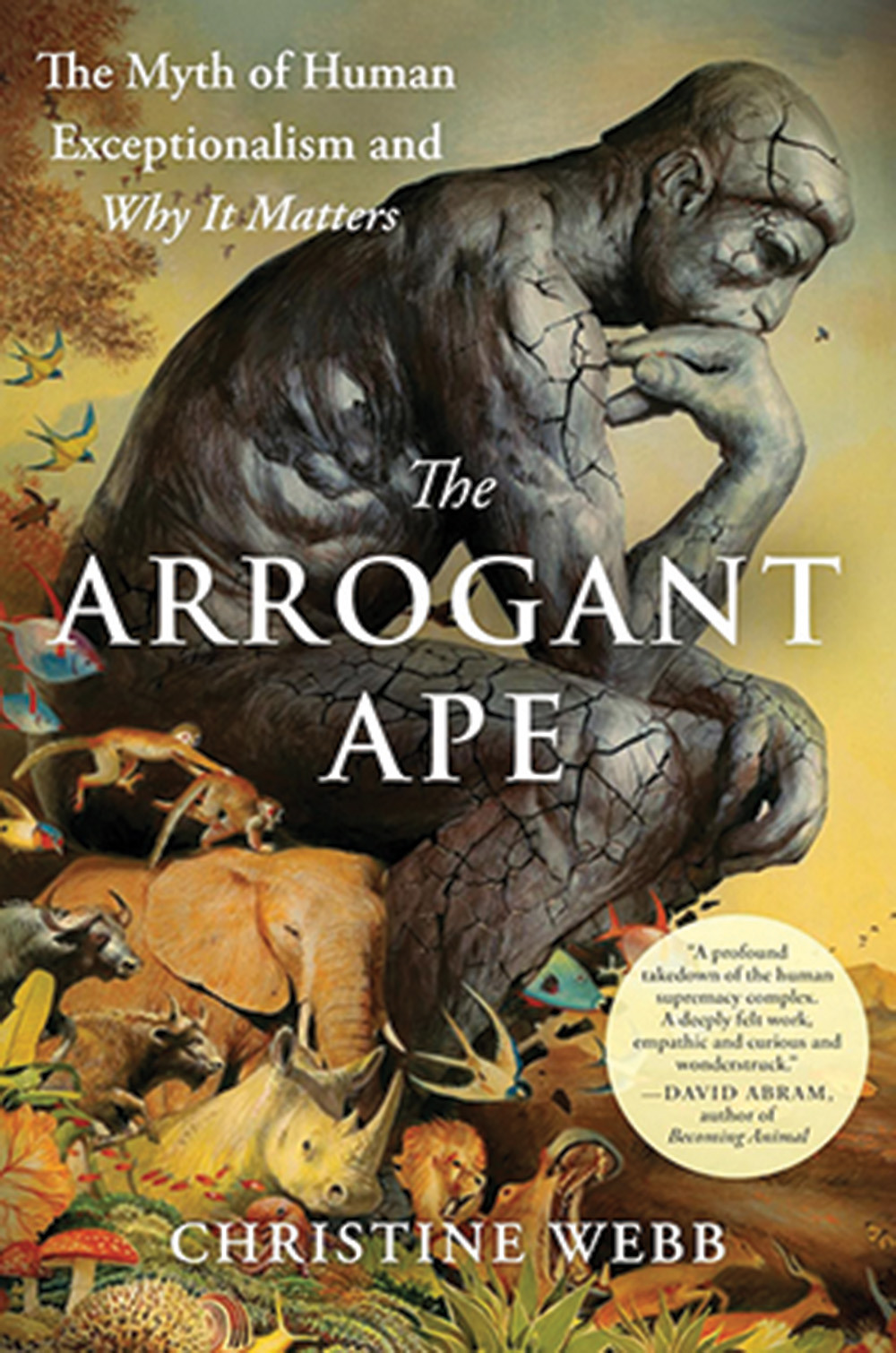
I hate to say this about the work of a fellow author, but The Arrogant Ape (Avery, 336 pp.) is one of the most shallow and impractical books I have ever read.
It is not that the author, Christine Webb, can’t write. And it’s not that she did not put much research into her many stories of striking animal behaviors. But her thoughts about what she calls the “myth of human exceptionalism” are mostly mere assertions, such as that Darwinian theory entails her position and the acceptance of human exceptionalism has caused an ecological crisis.
But human exceptionalism is no myth. The term conveys two symbiotically related concepts: First, that our lives are of unique equal intrinsic moral value, sometimes called the sanctity of life. And second, that humans—as the world’s only truly moral beings—have positive duties, the violation against which we can be held to account. After all, an elephant that tramples a farmer’s crops has not acted immorally. But humans engaging in the same destruction have. Indeed, if being human—in and of itself—is not what requires us to act properly and humanely toward each other and the natural world, what does?
Absurdly, Webb argues against an “interspecies model of prejudice.” More bizarrely, she claims that “reducing the status divide between humans and other animals can help combat discrimination … against members of the LGBTQ, Black, and immigrant communities.”
This is backward. Discrimination against fellow humans is wrong because it treats inherent equals as if they were unequal. Animals are not our equals, and while they should be treated humanely, we are not morally obliged to act toward them as we do each other.
Here’s a thought experiment: Is there a difference between accidentally killing a squirrel with your car versus a child? If you think the former is regrettable road kill and the other a terrible tragedy, you are a human exceptionalist.
Ultimately, Webb seeks to undermine what she denigrates as “orthodox Christian arrogance toward nature.” She throws in a chapter about how we need to apply “indigenous cosmologies” of a spirit-animated natural world to our public policies that would explicitly replace the Judeo-Christian worldview with “animistic” paganism, a belief system she calls “post humanism.”
Anti-humanism is more like it. She doesn’t grapple with how the radical policies she advocates, such as “degrowth,” would deleteriously impact human thriving. That lapse reduces the book to a mere mystical rant.
That’s the core failing of The Arrogant Ape. Rejecting human exceptionalism comes at tremendous cost. Because if we ever come to define ourselves as just another animal in the forest, that is precisely how we will act.