New Bill Proposes to Establish a “Commission on Human Dignity”
Originally published at National Review- Categories
- Human Dignity
And what, exactly, is “human dignity?” Do we all possess it as a matter of objective truth, simply and merely because we are human, or must we earn our status by possessing particular capacities? Do AI and biotechnological advances threaten human dignity and diminish our moral standing? If so, what should public policy do about it? These are among the important — nay, crucial — questions with which we must grapple as we rush, so far with few regulatory brakes, toward a brave new world.
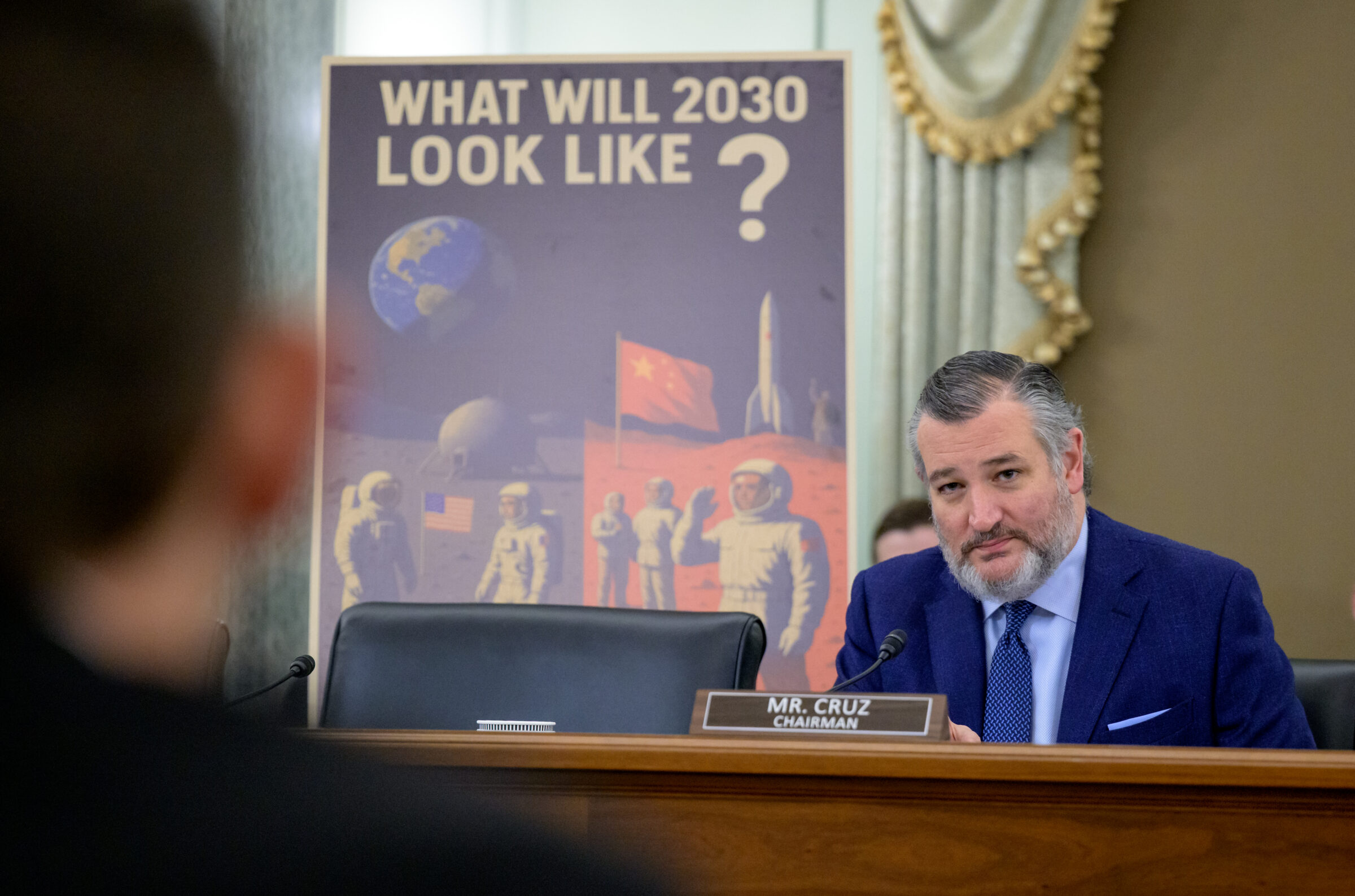
Now, an ideologically odd pair of United States senators — the conservative Ted Cruz (R., Texas) and the progressive Raphael Warnock (D., Ga.) want to do something about that. They are co-sponsoring the Human Dignity and Emerging Technologies Act, which would establish an advisory commission to assist government decision-making with regard to challenges to human dignity posed by the rush of scientific and technological advances.
This is how the bill defines the responsibilities of the commission:
(1) defend the inherent dignity of the human person understood as unique, embodied, and endowed with a rational and moral nature, without regard to capability or condition, within Federal science and technology policy; and (2) cultivate humility in Federal science and technology policy regarding technological mastery over human nature amid geopolitical competition.
To me, this sounds like defending human equality and exceptionalism. Good.
Among the proposed commission’s duties would be:
(2) Undertaking ongoing inquiry into the bioethical implications of the following developments in science and technology:
(A) Robotics.
(B) Artificial intelligence.
(C) Biotechnologies.
(D) Neurotechnologies.
(E) Emerging clinical technologies.
(3) Monitoring Federal science and technology programs, supported research, regulatory proposals, and emerging scientific and technological developments for threats to the inherent dignity of the human person.
This will not be a simple task. Society is riven by deep divisions about what human dignity actually means, whether we all possess it, and indeed whether we have any greater intrinsic value than flora, fauna, or even geological features.
Plus, how would the crassly utilitarian values of, say, a Peter Singer — with whom many Americans agree — square with the pro-human-life perspectives of a Catholic bioethicist like Charles Camosy, whose views also represent the values of many millions? Would the commissioners reflect these and all other moral approaches in between? If not, what good, in the end, would their conclusions be? If so, how could the commission ever reach consensus?
The commission would be advisory only, meaning that if its proposals stepped on too many politically powerful toes, I doubt they would ever become public policy. Commissions can advise all they want, but in our politics, money does the loudest talking.
Still, that doesn’t mean that no good would be served by passing this legislation. One of the duties of the commission would be to hold public hearings. Hopefully, that would engage the media’s interest and, in turn, bring these important discussions to the attention of the public and lead to productive debates. At the very least, such publicity might be able to blunt the most dystopian threats we face from AI and Big Biotech.
So, good for Cruz and Warnock for trying to fill a leadership void left by a president who seems to care only about the financial and geopolitical consequences of AI and biotechnological dominance and has offered zero leadership regarding the portentous moral consequences inextricably bound to these issues.