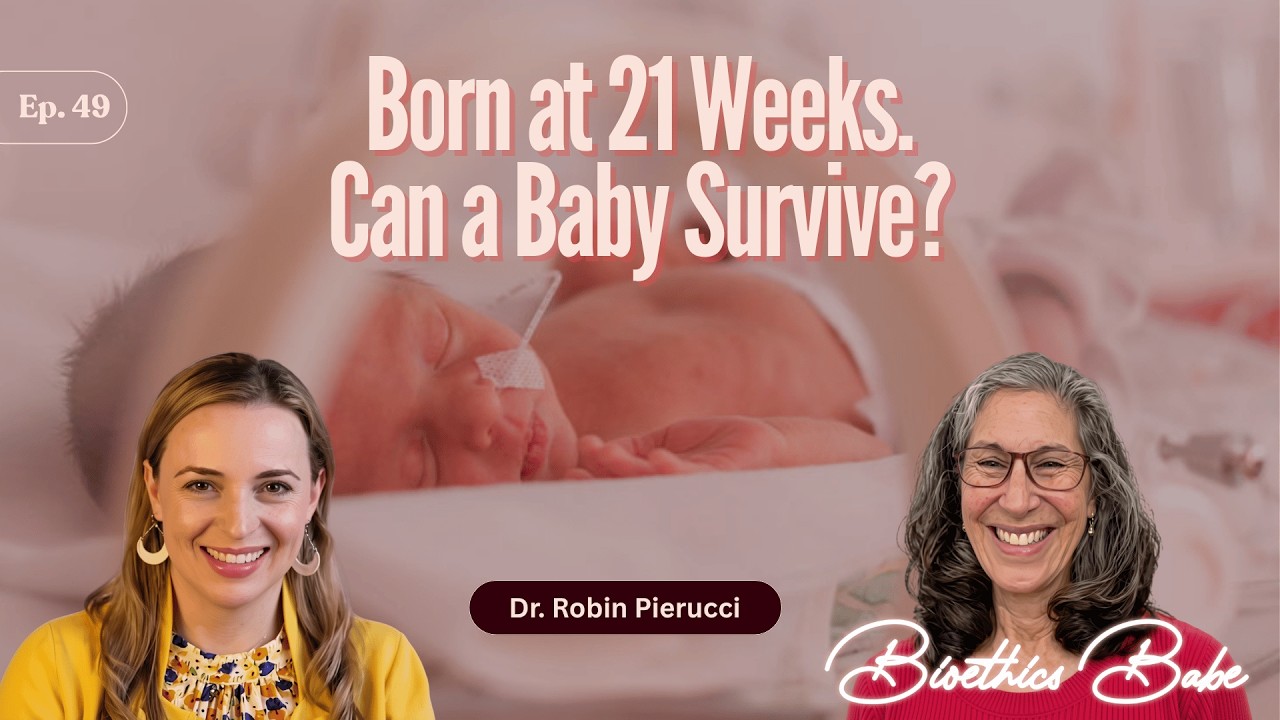
Born at 21 Weeks: How Early Can a Baby Survive? with Neonatologist Dr. Robin Pierucci
Originally published at Bioethics Babe- Categories
- Health Care
How early can a baby be born and survive? And what happens when whether that baby receives lifesaving care depends on which hospital the mother walks into?
The edge of viability is moving. Babies born at 22 weeks are surviving and thriving, and there are now documented survivors born at just 21 weeks. But outcomes can vary dramatically depending on where a baby is born, whether active treatment is attempted, and the experience of the medical team.
In this episode of Bioethics Babe, I sit down with neonatologist Dr. Robin Pierucci, who spent nearly 25 years caring for critically ill and extremely premature babies, including 17 years as medical director of a Level III NICU.
We discuss:
- How babies born at just 21 and 22 weeks can survive
- Why the edge of viability keeps moving earlier as medicine advances
- What happens in the delivery room when an extremely premature baby is born
- Why a baby’s hospital can dramatically affect the care offered and the outcome
- How decisions about whether to resuscitate can influence the very survival statistics later presented to parents
- What parents should ask about a hospital’s resuscitation policies before delivery
- The lungs, brain, skin, and other extraordinary developmental challenges of extreme prematurity
- How doctors help these babies not merely survive, but thrive
- Why disability and uncertain prognosis should not determine a child’s human worth
- The striking bioethical tension between lifesaving treatment for extremely premature babies and abortion at similar gestational ages
- Whether a constantly changing threshold like viability should determine which human lives receive protection
If the edge of viability keeps changing as medicine advances, can viability really tell us anything about the value of a human life?
This is a conversation about the limits of medicine, the extraordinary resilience of extremely premature babies, and why our technological ability to save a human life is not the measure of that life’s worth.
For the latest episodes, episode resources, and general resources, please visit www.bioethicsbabe.com.
Please subscribe to my YouTube page: https://www.youtube.com/@BioethicsBabe
Thank you for tuning in!
XOXO,
Bioethics Babe
Follow BB on social media:
YouTube: https://www.youtube.com/@BioethicsBabe
Facebook: https://www.facebook.com/profile.php?id=61576554667052
Instagram: https://www.instagram.com/bioethicsbabe
X: https://x.com/bioethicsbabe
Listen to BB on Your Favorite Podcast Platform:
Apple Podcasts: https://podcasts.apple.com/us/podcast/bioethics-babe/id1841776855
Spotify: https://open.spotify.com/show/0sk6pK4vYfvkdyQh3vVO5m
Amazon/Audible: https://music.amazon.com/podcasts/168b2504-9269-4910-b3da-6e0b954da9de/bioethics-babe
iHeart: https://www.iheart.com/podcast/269-bioethics-babe-296039682/
RSS: https://rss.com/podcasts/bioethicsbabe/