Humanize From Discovery Institute's Center on Human Exceptionalism
Topic

in vitro fertilization

YouTube Episode Thumbnails under 2 MB (20)

Seven Miscarriages, Two Living Children, and the Hidden Grief So Few Talk About with Gabriela Anastasopoúlou

Seven miscarriages. Two living children. Countless questions. What does it actually feel like to lose a child through miscarriage? What happens when the pregnancy test line starts fading and you realize you’re about to lose another baby? Why do so many women feel completely unprepared for the physical, emotional, and spiritual reality of miscarriage, despite the fact that roughly 1 in 4 pregnancies ends in miscarriage? In this deeply personal and moving conversation, Gabriela Anastasopoúlou shares her journey through a miscarriage, becoming a mom to her son, followed by seven miscarriages and secondary infertility, and the eventual birth of her daughter after years of unanswered questions and heartbreak. Gabriela opens up about: As a civil rights attorney and advocate for Read More ›
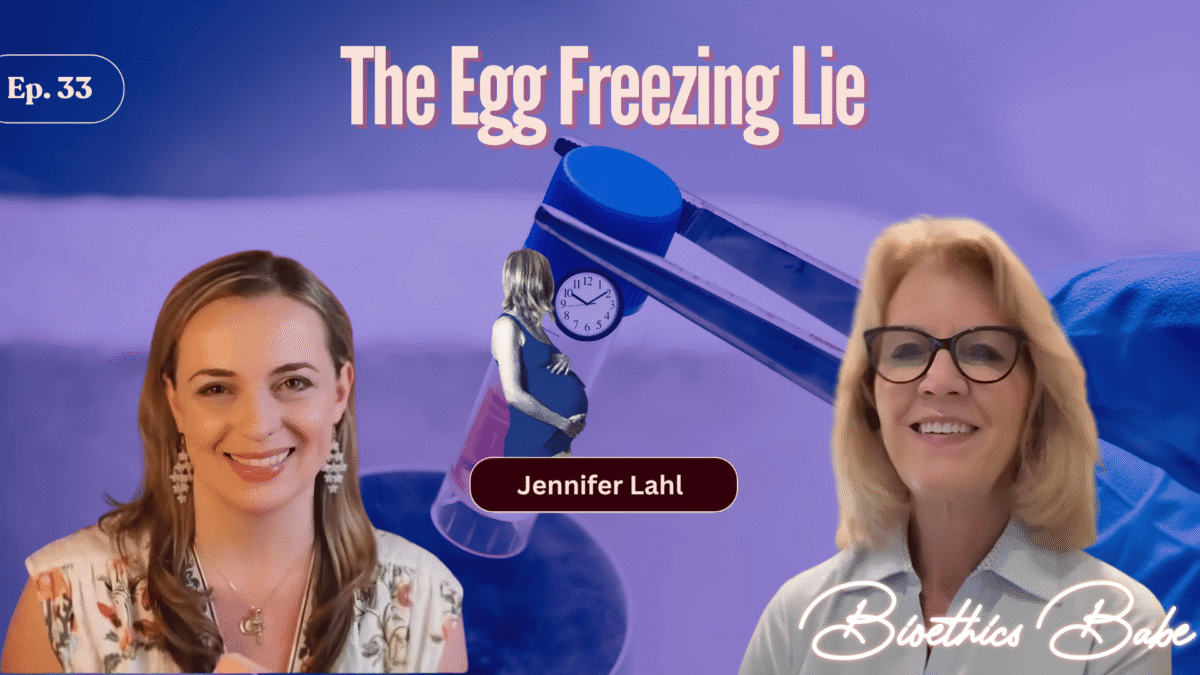
Ep. 33

The Egg Freezing Lie: What the Fertility Industry Isn’t Telling Women with Jennifer Lahl

Egg freezing is sold as empowerment. A way to “pause” fertility, focus on career and relationships, and have children later on your own timeline. But what if that promise isn’t as secure as women are being told? In this explosive episode of Bioethics Babe, Jennifer Lahl, founder of the Center for Bioethics and Culture Network and director of the documentary Eggsploitation, exposes the risks, realities, and ethical questions surrounding the rapidly growing egg freezing industry. We discuss: Is egg freezing truly empowering women, or is it selling the illusion that biology can be postponed without consequence? This conversation dives into the science, ethics, medicine, and cultural assumptions behind one of the fastest-growing reproductive technologies in the world. For Episode Resources, Read More ›

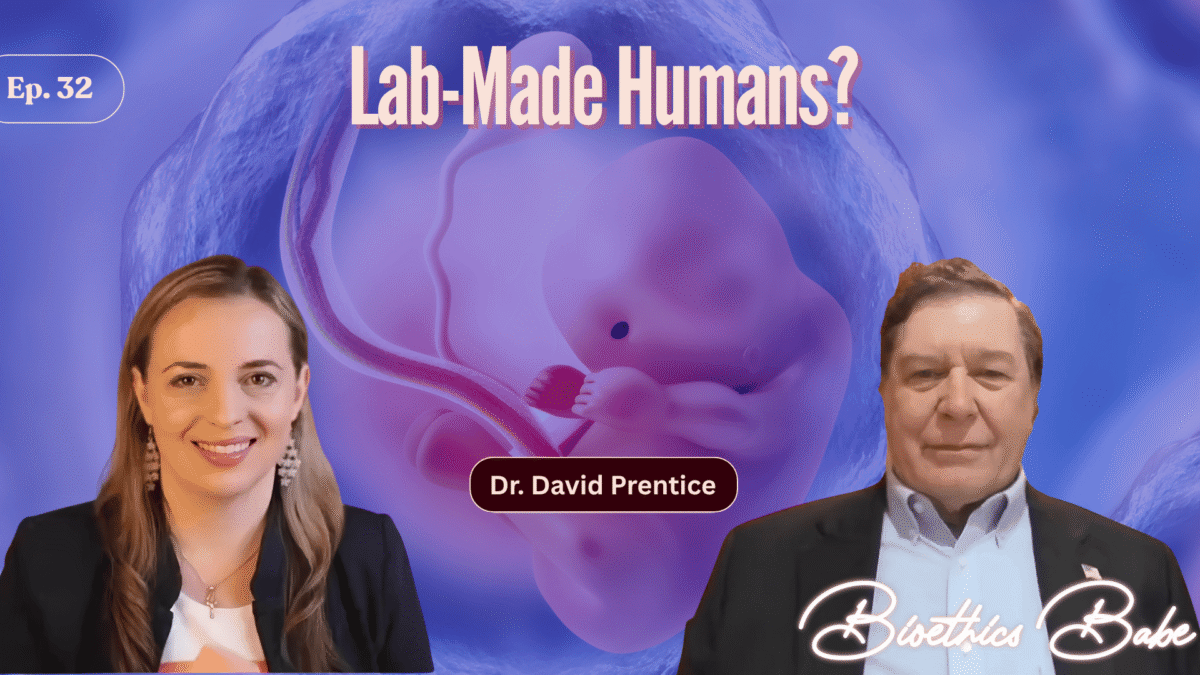
Ep. 32

Lab-Made Humans? Three-Parent Embryos, Genetic Engineering, and the Future of Humanity with Dr. David Prentice

What happens when science gains the power not only to heal human life, but to redesign it? Scientists are now creating lab-made embryos from stem cells, experimenting with three-parent embryos, pursuing gene editing technologies like CRISPR, and exploring ways to grow human life outside the womb. What once sounded like science fiction is rapidly becoming reality. In this episode of Bioethics Babe, internationally recognized stem cell researcher and bioethics expert Dr. David Prentice of the Science Alliance for Life and Technology (SALT) exposes the ethical dangers behind lab-made embryos, designer babies, germline gene editing, fetal tissue research, embryo selection, IVF commodification, and modern eugenics. We discuss: At what point does medicine stop treating disease and start redefining what kinds of Read More ›

a-female-patient-has-a-consultation-with-her-gynecologist-in-678198655-stockpack-adobestock
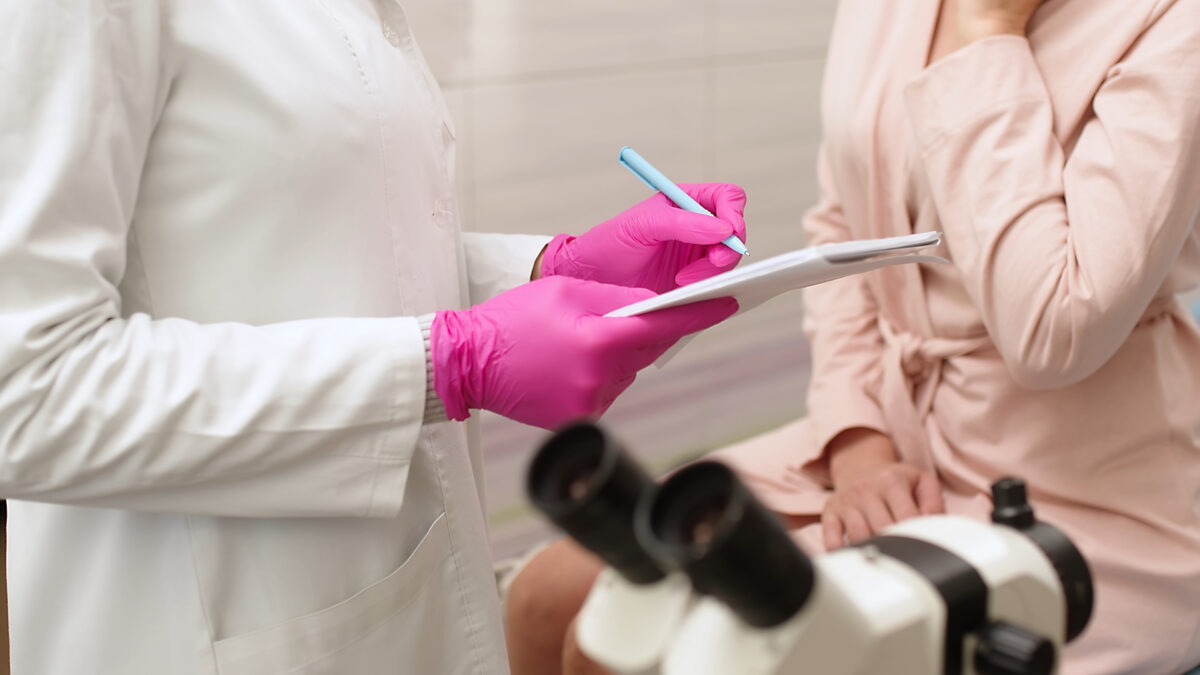
A female patient has a consultation with her gynecologist in a medical clinic. Women's health, colposcopy, examination of the uterus and ovaries.
Image Credit: wedmoments.stock - Adobe Stock

Uterine Transplants and Reproductive Anarchy

Uterine transplants are becoming more common to enable infertile women — and perhaps, eventually men — to give birth. How’s that project going? A new study detailing the outcomes of more than 40 cases of uterine transplants and subsequent IVF-enabled pregnancies published in JAMA provides details: Between 2016 and March 2026, a total of 44 women underwent uterus transplant. One month after uterus transplant, 37 women had a viable transplanted uterus. As of April 2026, a total of 33 women underwent embryo transfer (90 embryos), resulting in 47 clinical pregnancies in 31 unique women, 39 of which continued to at least 14 weeks’ gestation. In 27 unique women, there were 31 live births: 23 women delivered 1 child and 4 Read More ›

woman-gynecologist-holding-anatomical-model-of-uterus-and-ov-600295936-stockpack-adobestock
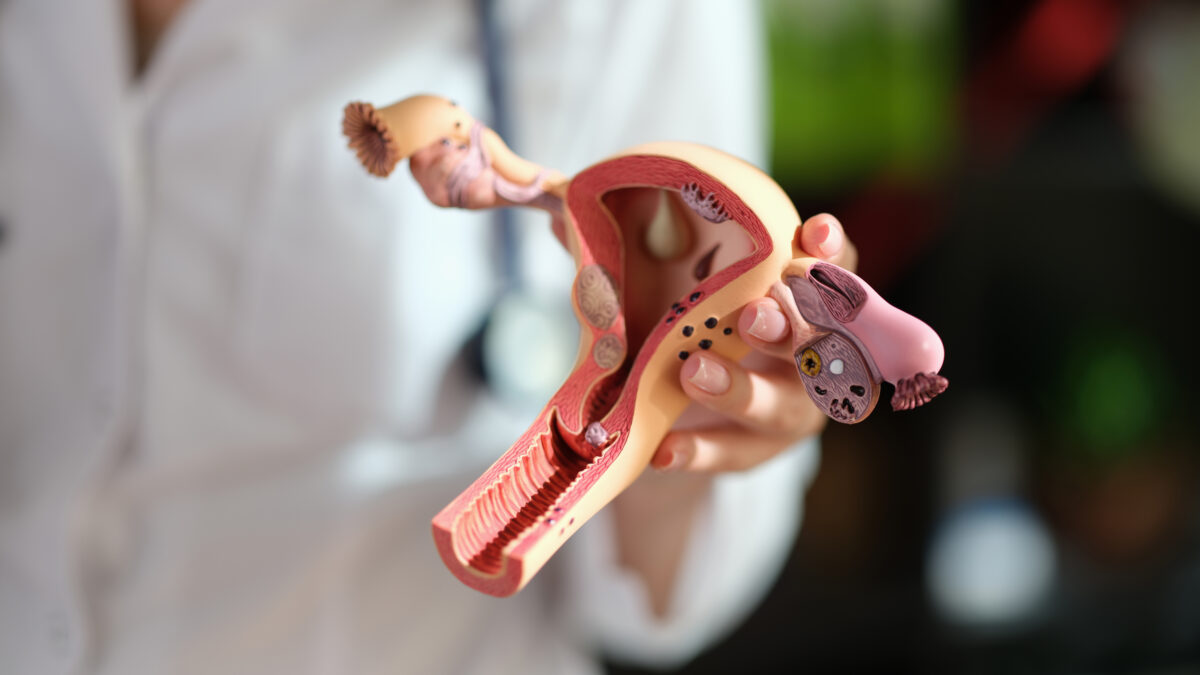
Woman gynecologist holding anatomical model of uterus and ovaries
Image Credit: megaflopp - Adobe Stock

Human Uterus Kept Functioning Outside the Body for Experiments

Brave new world alert! Scientists used a machine deployed in organ transplant medicine to keep a surgically removed human uterus alive for one day, furthering the goal of being able to use donated uteri experimentally over long periods of time, including for gestation. From the MIT Technology story: The team members want to keep donated human uteruses alive long enough to see a full menstrual cycle. They hope this will help them study diseases of the uterus and learn more about how embryos burrow their way into the organ’s lining at the start of a pregnancy. They also hope that future iterations of their device might one day sustain the full gestation of a human fetus. The machine is technically Read More ›

Episode 23

Infertility in the Age of IVF: Can Life Still Be Fruitful? with Leigh Snead

In an age of IVF, embryo selection, and a rapidly expanding fertility industry, couples facing infertility are often given a clear message: if you want a child badly enough, technology can make it happen. But what if that’s not the whole story? What if infertility is not just a medical condition to be solved but a profound personal, relational, and even spiritual trial? And what if a life without biological children can still be deeply meaningful and truly fruitful? In this episode of Bioethics Babe, I sit down with Leigh Snead, author of Infertile but Fruitful, fellow with the Catholic Association, and co-host of the nationally syndicated show Conversations with Consequences to explore the deeper questions surrounding infertility in the Read More ›

YouTube Thumbnails, under 2 MB (5)

Designer Babies: When IVF Becomes Human Design with Dr. Tara Sander Lee

IVF was introduced as a way to address infertility, even though it is fraught with ethical problems. But today, it increasingly involves grading embryos, screening genetic traits, and deciding which embryos are chosen. Are we entering an era where reproduction becomes human design? In this episode, Harvard-trained biochemist Tara Sander Lee, Ph.D., explains how modern IVF increasingly involves eugenic practices. We examine: As IVF expands beyond infertility “treatment” and into optimization, urgent questions emerge about human dignity, disability, and the moral limits of reproductive technology. This is a conversation about science, power, and whether medicine is meant to heal people or to redesign them. For Episode Resources, please visit the episode page here. For more information, the latest episodes, and Read More ›

YouTube Thumbnails, under 2 MB (2)

Is Love All You Need? Truth, Intention, and Moral Action with Fr. James Brent, OP

Is love really all you need to make something ethical? In a culture that treats good intentions as the highest moral standard, this episode asks a harder and more important question: Can love be ethical without truth? In this episode of Bioethics Babe, I’m joined by Fr. James Dominic Brent, OP, a Dominican priest and philosopher in the Thomistic tradition, to examine why sincerity alone isn’t enough in moral decision-making, especially in medicine, relationships, and family life. Drawing on Catholic moral theology and the philosophy of St. Thomas Aquinas, Fr. Brent explains: From IVF to euthanasia to sexual ethics, consent, and modern ideas of affirmation, this conversation challenges the assumption that “if it’s done out of love, it can’t be Read More ›

frustrated-young-woman-is-suffering-after-miscarriage-she-is-205790747-stockpack-adobestock
Frustrated young woman is suffering after miscarriage. She is looking at ultrasound pictures of her unborn baby and crying. Man is sitting and embracing her with love. Copy space
Image Credit: Yakobchuk Olena - Adobe Stock

An Ethical Alternative to IVF

Approximately 10-15% of U.S. couples of reproductive age experience infertility. One response is to pursue in vitro fertilization (IVF), which is fraught with many negative ethical and practical implications. Another way is to get to the root cause of infertility. Shouldn’t that be the MAHA way? President Trump expanded access to IVF with his February 2025 executive order. In October, he lowered costs for IVF and other fertility treatments. While IVF does indeed “create” more babies, it comes at a steep physical, emotional, and ethical cost for couples (for an in-depth discussion of these and other issues relating to IVF, please see my podcast episode with Emma Waters on Bioethics Babe). At its heart, IVF circumvents infertility by moving procreation Read More ›

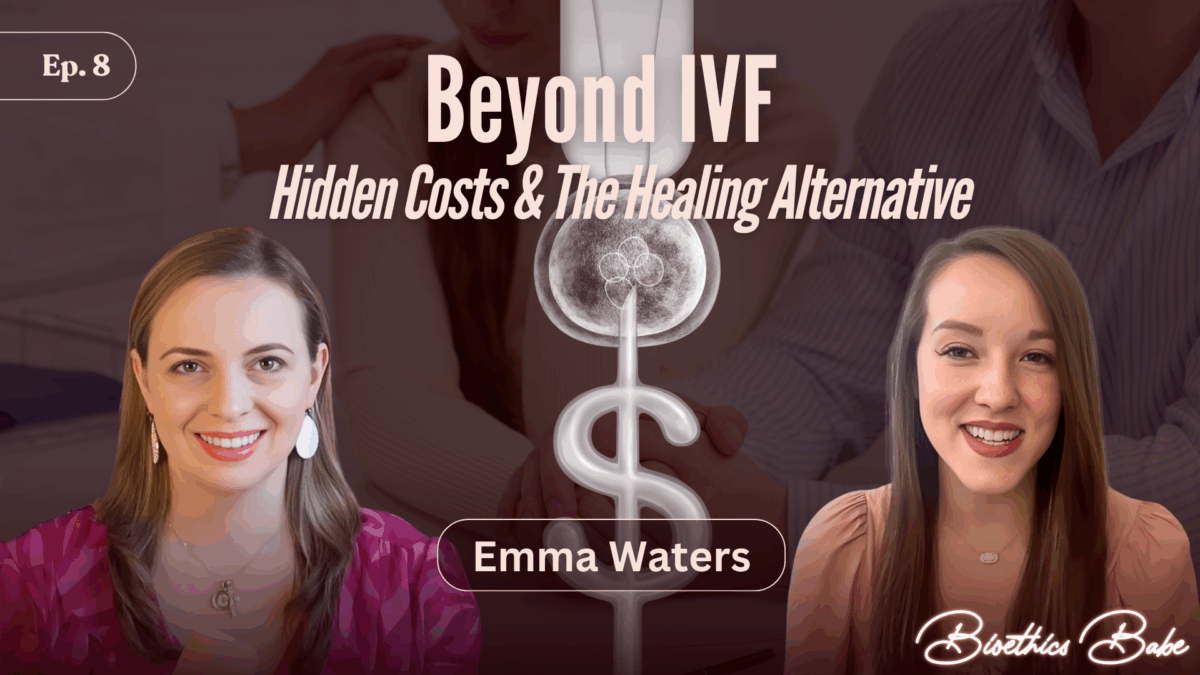
Episode 8 Thumbnail

Inside the IVF Industry: The Hidden Costs of Creating Humans in a Lab and the Restorative Alternative with Emma Waters

In this powerful episode of Bioethics Babe, Emma Waters, a policy analyst at the Heritage Foundation’s Center for Technology and the Human Person, joins Arina Grossu Agnew to unpack the hidden costs of in-vitro fertilization (IVF) and the ethical questions surrounding the fertility industry. While IVF is often hailed as a miracle solution for infertility, few people stop to ask what’s lost when life begins in a lab instead of the womb. Emma explains why IVF bypasses the real causes of infertility, the moral and physical risks it poses, and how Restorative Reproductive Medicine (RRM) offers a healthier, more human-centered alternative that heals the body rather than replacing it. We discuss: If you’ve ever wondered what IVF means for medicine, Read More ›