Humanize From Discovery Institute's Center on Human Exceptionalism
Topic

Public Health

Episode 16 thumbnails

Vaccines, Trust, and Informed Consent After COVID with Dr. Jay Richards

In a post-COVID world, families are asking harder questions about vaccines and those questions deserve serious, ethical answers. In this episode of Bioethics Babe, I’m joined by Jay Richards, Vice President of Social and Domestic Policy and the William E. Simon Senior Research Fellow in American Principles and Public Policy at The Heritage Foundation, where he also chairs the Restoring American Wellness initiative. He is also a senior fellow at Discovery Institute. We explore how families can think clearly and ethically about vaccines after COVID. This conversation covers informed consent, risk-benefit analysis, parental responsibility, the updated CDC childhood immunization schedule, and the growing crisis of trust in public health institutions. This episode is for parents, healthcare professionals, policymakers, and anyone Read More ›

green-earth-day-save-the-wold-and-global-healthcare-concept-164073189-stockpack-adobestock
Green Earth day, Save the wold and Global healthcare concept. Stethoscope wrapped around globe on blue background.
Image Credit: Khongtham - Adobe Stock

Redefining “Human Health” to Impose International Technocracy

The public-health intelligentsia and bioethics movement are determined to become the primary policy decision makers internationally. For example, back in 2020—at the height of COVID—Anthony Fauci wrote that the UN and WHO should be empowered to “rebuild the infrastructure of human existence.” You don’t get much more expansive than that. In the years since, others among that ilk have pounded the same drum furthered by an international agreement known as “One Health” (without US involvement) establishing an international bureaucracy aiming “to sustainably balance and optimize the health of people, animals and ecosystems.” Toward that end, writing in The Lancet, a gaggle of international technocrats and academics reject the WHO’s current definition of human health as “a state of complete physical, Read More ›

gorilla-mother-and-baby-bwindi-impenetrable-forest-national-561136883-stockpack-adobestock
Gorilla Mother and Baby Bwindi Impenetrable Forest National Park Uganda 4168
Image Credit: George Erwin Turner - Adobe Stock

Only Bioethics Can Save the Planet!

The ambition of the bioethics movement continues to inflate. Now, we are told, humanity and endangered species need rescuing.

Writing in The Lancet, 22 (count ’em) bioethicists argue that there is a planet to save and they are just the experts to do it! From “Bioethics for the Planet“:

Severe threats to the health of humans and other species derive from degradation of Earth’s life-support systems, particularly the impacts of climate change. Researchers and practitioners in clinical medicine, public health, global health, and One Health are increasingly focusing on these risks to planetary health, which include (but are not limited to) rising temperatures, extreme weather disasters, intensified wildfires and flooding, biodiversity and species loss, expansion of vectors of infectious diseases, reduction or arable land alongside growth of intensive and factory farming, a proliferation of microplastics, antimicrobial resistance, and chemical contamination of the environment.

Consequently, the authors argue, the field should no longer be limited to health care, public health policy, clinical controversies, and medical ethics:

Read More ›
backlit-silhouettes-of-a-diverse-group-of-individuals-raisin-733774184-stockpack-adobestock
Backlit silhouettes of a diverse group of individuals raising their fists in solidarity against an urban skyline at sunset.
Image Credit: WARAPHON - Adobe Stock

Bioethics Is Becoming Just Another Social-Justice Political Movement

The field of bioethics was established to work through the proper parameters of medical ethics and to grapple with the vexing public health policy questions that arose in an increasingly technological age. The field’s primary (but not only) contribution to the public good (in my opinion) came early, through the work of the late theologian Paul Ramsey. In his seminal work, The Patient as a Person, Ramsey argued that forcing patients to be hooked up to “machines” against their will treated them as less than equals. The resulting bioethical discourse resulted in the legal right we all have to informed consent and to refuse unwanted medical treatment, even if that could lead to our deaths. Alas, in the decades since Ramsey’s heyday, Read More ›

Logo_of_the_World_Health_Organization

Trump Withdraws from the World Health Organization

President Trump has withdrawn the United States from the World Health Organization (WHO) because of its Covid failings, allegations of being soft on China, and the disproportionate share of funding borne by the United States. There is even more wrong in how WHO leaders have wielded their influence. In recent years, the organization has not just been about promoting public-health internationally, but also in using its clout to impose woke cultural agendas on the world — including areas that have traditional moral values — and in seeking to construct an international technocracy. Item: WHO sought to force a radical abortion regime on the world by allowing abortion through the ninth month and curtailing the right of conscience by doctors to Read More ›

White_House_Coronavirus_Update_Briefing_(49809248503)
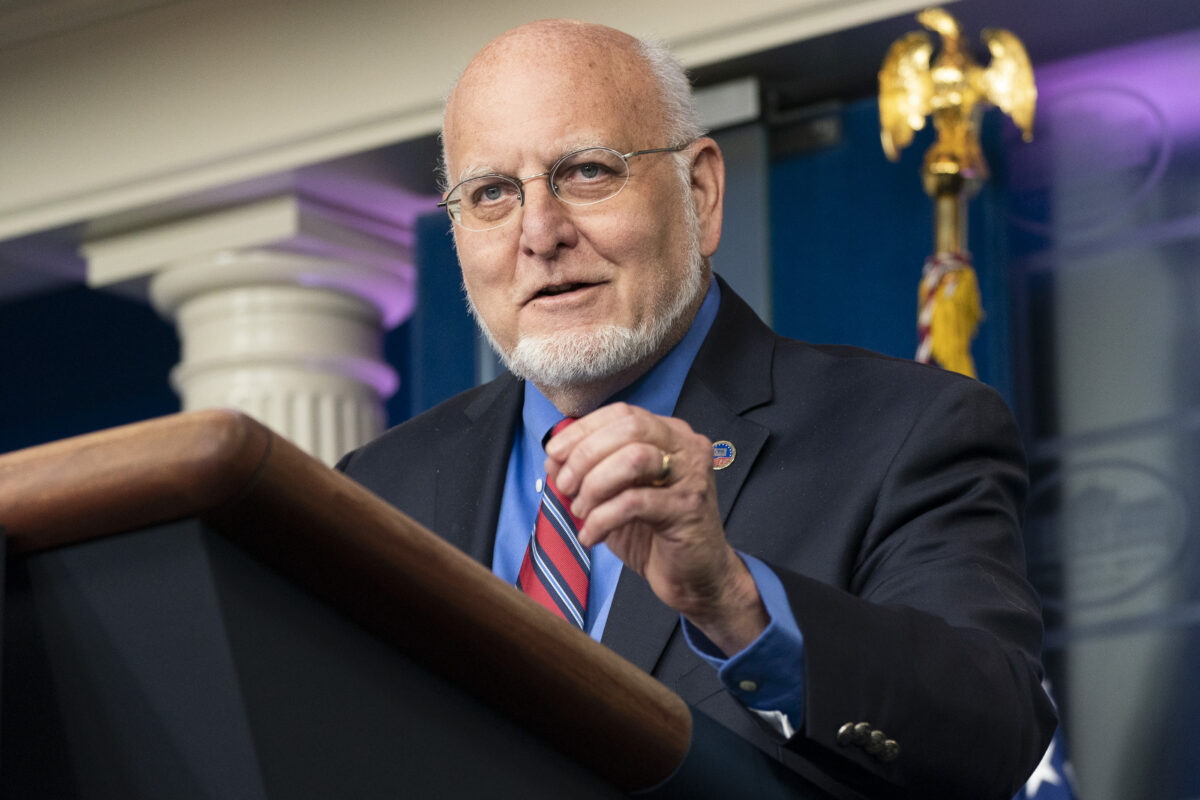
Public domain image from the White House, accessed at Wikimedia Commons: https://commons.wikimedia.org/wiki/File:White_House_Coronavirus_Update_Briefing_(49809248503).jpg

Former CDC Director Robert R. Redfield on Viruses, Vaccines, the COVID Epidemic, and Distrust in Public Health

The public health sector has been roiled by controversy and political turmoil in the last few years, what with the COVID pandemic, the fight over vaccine mandates, and questions about politicization of the sector. Beyond that, viruses make the news like never before. So, Wesley turned to an expert in both fields to learn more about virology, the government’s response Read More ›

Storming_capital_IMG_3519_Wikimedia_Commons
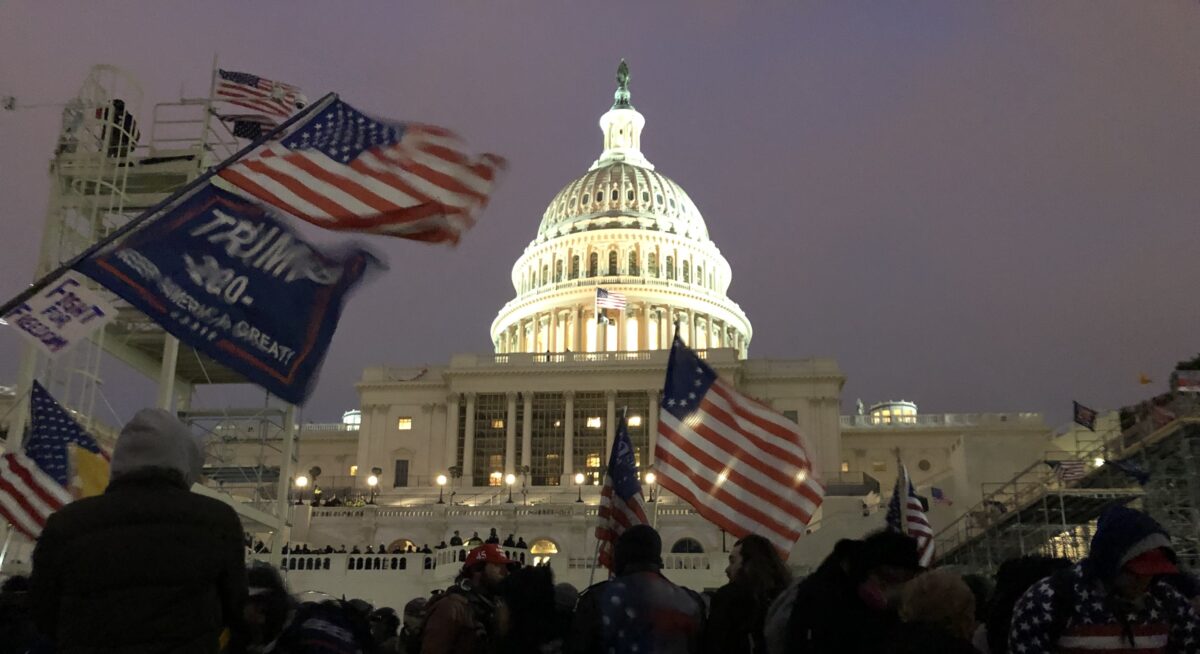
Image by Tyler Merbler at Wikimedia Commons: https://commons.wikimedia.org/wiki/File:Storming_capital_IMG_3519_(cropped).jpg

New Yorker Editor: (Right-Wing) Political Violence Should Be Considered a “Public Health Threat”

The medical/scientific intelligentsia and the political Left seemingly want every political controversy and cultural problem transformed into a public-health threat. Let us count them: Climate change, racism, gun control, a dearth of left-wing economics policies, even war. Now, a column by Michael Luo, an executive editor at the New Yorker, urges that political violence be categorized in the same way. From, “Should Political Violence be Addressed Like a Threat to Public Health?”: The principal aim of public health is prevention. It takes its scientific cues primarily from epidemiology, which studies the prevalence of diseases and their determinants to shape control strategies. In the mid-nineteen-sixties, public-health practitioners began to incorporate these methods into a nascent discipline known as injury science, taking on problems such as children falling from windows, residential fires, childhood Read More ›

a-hand-in-a-medical-glove-draws-liquid-from-an-ampoule-from-699951457-stockpack-adobe_stock
a hand in a medical glove draws liquid from an ampoule from a syringe with a needle
Image Credit: kazakova0684 - Adobe Stock

Suicide Is a Problem. Left-Wing Policies Disguised as “Public Health” Aren’t the Solution

Suicide is at a crisis level in the United States and around the world. According to the World Health Organization, more than 700,000 people committed suicide in 2019. In 2022, there were 49,476 self-inflicted deaths in the U.S. alone, or 14.2 per 100,000 people.

At the same time, assisted-suicide activism enjoys ever higher visibility, continually promoted in the media and popular culture as the best way to “die with dignity,” resulting in an increasing toll. Each year, well over 20,000 people around the world die by assisted suicide or euthanasia — which are generally not included in suicide statistics.

It is into this disturbing and paradoxical paradigm that The Lancet Public Health medical journal devoted an entire issue to suicide prevention. This should have been a welcome boost to saving lives. Instead, the mostly facile articles focus substantially on expanding government and promoting liberal policies as the best means of reducing suicides. Indeed, taken as a whole, the edition reflects the latest trend in medical-journal advocacy to transform political controversies — i.e., climate change, racism, and the like — into public-health crises to enable increased regulation and the imposition of left-wing public policies.

That is not to say that public health doesn’t have a significant role to play in suicide prevention. Of course it does. But the authors advocate shifting primary responsibility for suicide prevention from normal public-health activities and patient-centered clinical settings to an “all population approach” in which “all parts of government” will be “accountable” for the “social and commercial determinants of suicide risk.” In other words, everything government plans and executes would become ultimately about suicide prevention.

Read More ›
Kamala_Harris_at_July,_3_2017_healthcare_rally_5
Public domain image from Wikimedia Commons: https://upload.wikimedia.org/wikipedia/commons/7/7b/Kamala_Harris_at_July%2C_3_2017_healthcare_rally_5.jpg

Scientific American Harms Science by Endorsing Harris

The science establishment continues to politicize “science” — and that ain’t good for science.

In July, Nature — supposedly the most respected science journal in the world — endorsed Kamala Harris. Now, following the ideological leader, so has Scientific American.

And what a sad joke the endorsement is. For example, the editorial repeats the lie that Trump told people to inject bleach to fight Covid. From the editorial:

Trump touted his pandemic efforts during his first debate with Harris, but in 2020 he encouraged resistance to basic public health measures, spread misinformation about treatments and suggested injections of bleach could cure the disease.

No. He. Did. Not.

How can an editorial in a supposedly factually based scientific publication be trusted as dispositive when it pushes a lie that has repeatedly been debunked — even by Snopes? This alone should discredit SA as a reliable guide to voting.

Read More ›
various-groceries-in-shopping-cart-stockpack-adobe-stock
Various groceries in shopping cart
Image Credit: WavebreakmediaMicro - Adobe Stock

Medical Journal Article: Replace SNAP Benefits with Cash

Continuing my discussion of how ideological medical and science journals strive to redefine almost every public policy controversy into matters of public health to push leftwing agendas: An article in the notoriously woke New England Journal of Medicine argues that rather than give SNAP benefits to poor people — what used to be called food stamps — cash transfers should be provided to improve the “health” of the recipients. Read More ›