Humanize From Discovery Institute's Center on Human Exceptionalism
Topic

chemical abortion

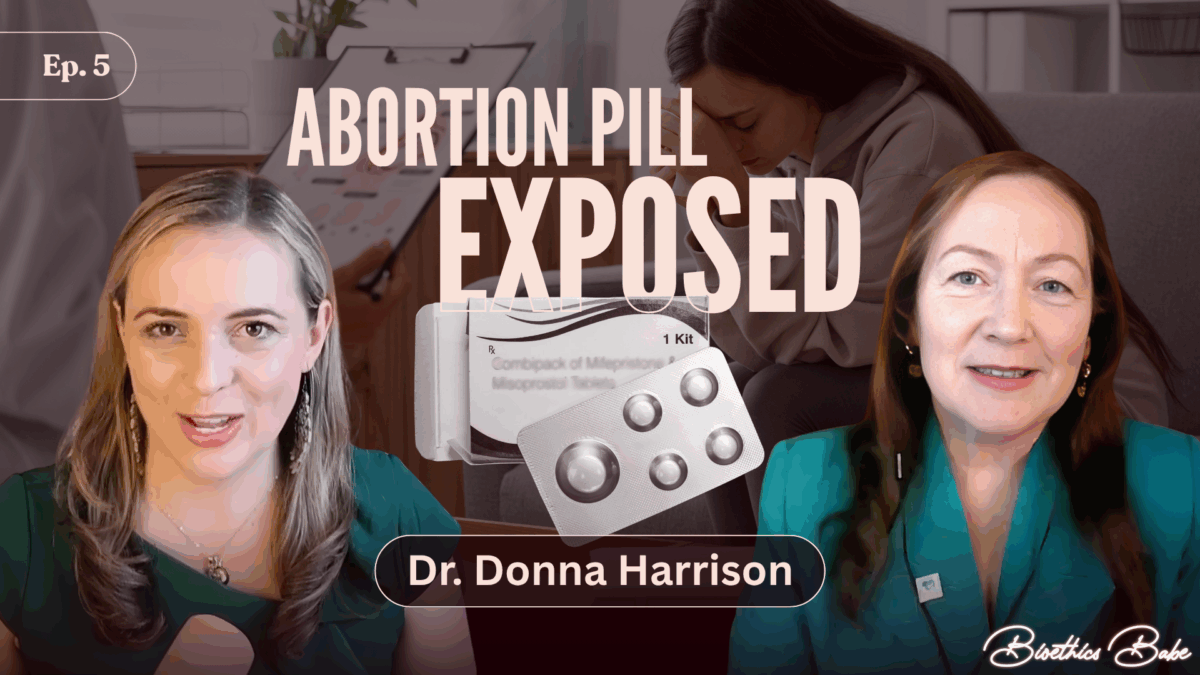
Episode 5 thumbnails

Abortion Pill Exposed: What the FDA and Planned Parenthood Don’t Want You to Know with OB-GYN Dr. Donna Harrison

What if everything you’ve heard about the abortion pill isn’t the full story? Nearly two-thirds of all U.S. abortions are chemical abortions. Board-certified OB-GYN Dr. Donna Harrison, Director of Research for the American Association of Pro-Life Obstetricians and Gynecologists (AAPLOG), joins Bioethics Babe to pull back the curtain on chemical abortion — from how mifepristone (RU-486) and misoprostol actually work in a woman’s body, to the hidden complications women face, to the behind-the-scenes schemes at the upper echelons of power that took place to get the abortion pill to America. Did you know that the Population Council created a Cayman Islands shell company called Danco in order to get mifepristone to the U.S.? Did you know that taxpayer dollars helped Read More ›

rear-view-of-young-woman-with-bag-standing-against-shelf-in-414670372-stockpack-adobe_stock
Rear view of young woman with bag standing against shelf in pharmacy searching for medicine
Image Credit: StratfordProductions - Adobe Stock

JAMA Article Pushes for Over-the-Counter Abortion Pills

Taking abortion pills can lead to dangerous side effects, perhaps even death. Which is why the process of chemical abortion — called “medical” by pro-abortion advocates — is supposed to occur only under the guidance of a doctor. Indeed, post-Dobbs, women died because of improperly supervised chemical abortions, wrongly blamed by the media and pro-abortion advocates on pro-life laws.

But the medical establishment is so invested in unlimited abortion that JAMA Internal Medicine just published an advocacy article calling for the two drugs used in chemical abortions to be available over the counter:

A growing body of evidence indicates that mifepristone and misoprostol meet the FDA’s criteria for OTC sale. The medications are not addictive, and the user determines on their own whether they have the condition needing treatment, in this case an unwanted pregnancy. The criteria that the FDA is likely to focus on are whether the user can appropriately self-select for use and whether they can use the product correctly over time, often referred to as actual use.

Regarding the former, research indicates that people can accurately self-assess their gestational duration and other eligibility criteria for medication abortion. In the event someone uses the regimen significantly past 10 weeks of pregnancy (for example, after 12 weeks’ gestation), it is less likely to be effective, but it is unlikely to cause serious medical complications for the pregnant person. For the question about actual use, even with facility-based medication abortion, patients generally take the medications on their own at home, manage adverse events, and determine when they need follow-up care. [Citations omitted.]

Read More ›