Humanize From Discovery Institute's Center on Human Exceptionalism
Author

Wesley J. Smith

recovering-little-child-lying-in-the-hospital-bed-sleeping-m-223038503-stockpack-adobestock
Recovering Little Child Lying in the Hospital Bed Sleeping, Mother Holds Her Hand Comforting. Focus on the Hands. Emotional Family Moment.
Image Credit: Gorodenkoff - Adobe Stock

Twelve-Year-Old Euthanized in the Netherlands: Not a First

The media is (properly) reporting that a Dutch doctor euthanized — i.e. killed — a sick twelve-year-old child (illness not reported). It is a “first” under a new Dutch law that allows euthanasia for children ages one to twelve. From the story in The Independent: In a latter to parliament, Dutch health minister Sophie Hermans said that the child had died last year but did not clarify their age, date of death or the illness that they suffered, according to broadcaster NOS. The law in the Netherlands was changed in 2014 to extend euthanasia to children under the age of 12 to allow them to “die with dignity” if there was no route to escape extremely severe pain or suffering. Read More ›

green-maple-tree-canopy-stockpack-adobe-stock-186255825-stockpack-adobestock
green maple tree canopy
Image Credit: yvonne navalaney - Adobe Stock

Canadian Town Grants Rights to Trees

In Quebec, a small town has granted “rights” to trees. From the CBC story: A small town west of Montreal has decided to officially recognize trees as living beings with rights of their own, in what an environmental organization describes as a first in Quebec and Canada. A resolution adopted by Terrasse-Vaudreuil city council on June 9 declares that trees are worthy of protection, “including the right to life, to natural growth, to integrity and to regeneration.” Does a “right to life” mean they can’t be cut down? Does the “right to natural growth” mean they can’t be trimmed or cleared for fire safety? Does the “right to regeneration” mean that saplings must be allowed to grow in place and Read More ›

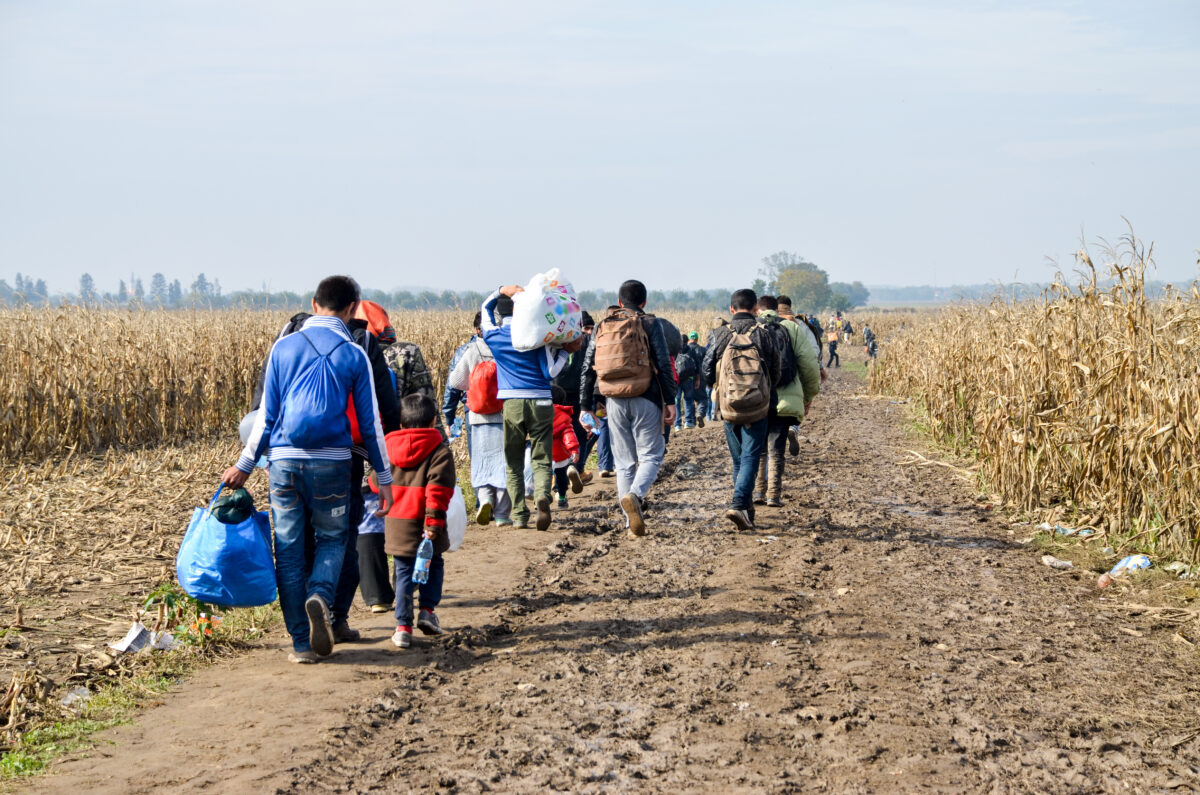
group-of-war-refugees-walking-in-cornfield-syrian-refugees-c-379881175-stockpack-adobestock
Group of War Refugees walking in cornfield. Syrian refugees crossing border to reach EU. Iraqi and Afghans. Balkans Route. Migrants on their way to European Union. Large group of people immigrate
Image Credit: Ajdin Kamber - Adobe Stock

Medical Journal Supports Unlimited Migration

The Lancet just published an editorial that essentially supports unlimited migration — although it doesn’t use that term — and makes no distinction between legal and illegal immigration. From, “Migration a Reality, Not an Emergency:” Migration is among the oldest facts of human life, yet it is treated as one of the newest emergencies: anti-immigration protests have intensified in the UK and immigration raids have swept US cities. As we mark World Refugee Day, the follow-up Review to the 2018 UCL-Lancet Commission on Migration and Health, published in this issue, renews the Commission’s call for action and asks whether, in a climate shaped by fear, evidence can still drive policy. The editorial ignores international and national laws. In the United Read More ›

kids-feed-elephant-in-zoo-family-at-animal-park-stockpack-ad-329470615-stockpack-adobestock
Kids feed elephant in zoo. Family at animal park.
Image Credit: famveldman - Adobe Stock

Another “Elephants Are Persons” Lawsuit Goes to a State Supreme Court

Here we go again. Several years ago, the radical Nonhuman Rights Project (NhRP) sued in New York to have chimps declared “persons.” The case lost in the trial court and, ultimately, the court of appeals (the highest court in the state) refused to review it.

But one high-court judge took the time to issue a concurring opinion (citing an animal-rights-promoting book) opining that while review would have been wrong, whether chimps should be proper subjects for a writ of habeas corpus is appropriate, in part because denying the right is “based on nothing more than the premise that a chimpanzee is not a member of the human species.”

Next, the NhRP brought a lawsuit in New York to have a (now deceased) elephant named Happy, which (not who!) had resided at the Bronx Zoo for decades, declared a person. The lawsuit lost but did better. Not only did the court of appeals hear the case, but two — count ’em, two — judges out of seven said that Happy should be declared a person with rights and, moreover, ludicrously compared the differing treatment between animals and humans with the discriminatory laws that once allowed slavery and denied equality to women.

Read More ›
doctor-giving-hope-close-up-shot-of-young-female-physician-l-432825954-stockpack-adobestock
Doctor giving hope. Close up shot of young female physician leaning forward to smiling elderly lady patient holding her hand in palms. Woman caretaker in white coat supporting encouraging old person
Image Credit: fizkes - Adobe Stock

The Health-Care Lexicon Is De-Professionalizing the Practice of Medicine

In recent years, the term “service provider” has been deployed widely as a descriptor for doctors and other medical professionals. That’s unfortunate, as the terminology de-professionalizes those who work and study for years to become expert at delivering medical treatments, interventions, diagnoses, and counseling. And it concomitantly threatens to transform patients into mere customers; doctors, essentially into so many order takers.

Some physicians’ organizations have noticed the trend and are pushing back. A few months ago, an opinion article in the Annals of Internal Medicine argued that using the term “service provider” has negative ethical implications. From “Physicians are not Providers” (citations omitted):

First, the current use of provider in reference to institutions, insurers, physicians, nurses, physician assistants, and other clinicians lumps impersonal entities in with humans and obscures differences in clinical training and expertise.…

Second, the duties of physicians differ from those of individuals and entities who deliver commercial and other services.…This partnership is not transactional but rather relational.…

Third, use of the term provider undermines ethics and professionalism. Medicine is dedicated to serving others whose trust must be earned. As quoted in the ACP Ethics Manual, Francis Peabody said that medicine is not “a trade to be learned, but a profession to be entered,” with publicly declared values (in Latin, the “profess” in “profession”) and ethical duties to uphold.…

Fourth, language not only affects the perception and value attributed to what is being provided but can also alter one’s professional sense of self and influence behavior. Communication and language are key. To quote Robert M. McLean, MD, former president of ACP, “Patients share things with us that they share with nobody else, including close family.” Language should focus on “health and not healthcare, on relationships and not transactions, and on people and not products.”

That makes abundant sense to me.

Read More ›

hands-doctor-and-writing-prescription-at-hospital-in-office-1879443944-stockpack-adobestock
Hands, doctor and writing prescription at hospital in office, documents and recommendation with advice. Person, medical professional and paperwork for medicine, report and administration at clinic
Image Credit: WesJVR/peopleimages.com - Adobe Stock

Americans Are of Two Minds About the “Moral Acceptability” of Suicide

Gallup just issued its annual poll on “moral acceptability.” I was struck by the dramatically different results in the two questions about suicide.

The first question asked about “doctor assisted suicide.” Close to a majority, 49 percent, of respondents answered that committing suicide with a doctor’s help is morally acceptable, while 45 percent responded that it is not.

The other question asked simply about the moral acceptability of “suicide.” Strikingly, only 21 percent said that it is morally acceptable to take one’s own life, while a whopping 70 percent said it is not. Indeed, suicide was one of the lowest “morally acceptable” behaviors in the entire poll. Only cloning humans, polygamy, and extramarital affairs had a lower moral acceptability rating.

That’s quite a paradox. So, what’s going on? Why the wide disparity in answering two questions that are about the same issue?

Read More ›
13.10.2025 – Audiência com Sua Santidade o Papa Leão XIV
Public Domain image from Wikimedia Commons: https://commons.wikimedia.org/wiki/File:13.10.2025_%E2%80%93_Audi%C3%AAncia_com_Sua_Santidade_o_Papa_Le%C3%A3o_XIV_-_54851688829.jpg

Peter Singer Criticizes Pope Leo’s Encyclical for Embracing Human Exceptionalism

The utilitarian bioethicist Peter Singer opposes human exceptionalism. Indeed, he contends that being human is irrelevant to determining moral value. What counts are capacities and the ability to suffer. Singer advocates using the term “person” to identify individuals with the highest moral value. Since he believes that personhood is based on capacities, some humans are not persons — the unborn, infants, the profoundly cognitively disabled — while some animals are. This means that those animals matter more morally than the vulnerable humans he so casually depersonalizes. It is thus unsurprising that Singer takes issue with Pope Leo’s encyclical on AI because of the document’s stalwart defense of universal human rights and its intense focus on the impact AI will have Read More ›

overhead-flat-lay-of-a-doctors-prescription-pad-a-stethoscop-1999539921-stockpack-adobestock
Overhead flat lay of a doctor's prescription pad a stethoscope and a small bottle of generic capsules on a bright clean wooden desk prescription writing clinical desk
Image Credit: Kateryna - Adobe Stock

New Jersey Doctor Has Legally Assisted About 200 Suicides

There is an old joke: What do you call the medical student who finished last in his class? Answer: “Doctor.”

The increasing legalization of assisted suicide has accorded that joke a disturbing pertinence. A doctor who prescribes poison need not be an excellent medical practitioner. He or she need not specialize in treating patients who present with particular life-threatening conditions, and indeed, can prescribe even if never treating the patient’s underlying condition at all.

For example, Jack Kevorkian was a pathologist who never treated a living patient after medical school. But if assisted suicide had been legal in his time, he would have been qualified to lethally prescribe. Along similar lines, before assisted suicide was legalized, the California death doctor Lonny Shavelson was a part-time ER doc who mostly pursued a career as a photojournalist and author.

Read More ›
hdr-image-of-houses-of-parliament-stockpack-adobe-stock-44968288-stockpack-adobestock
Hdr image of Houses of parliament
Image Credit: olavs - Adobe Stock

“Nature’s Rights” Bill Presented in U.K. Parliament

The “nature rights” movement continues to advance. Now, a bill has been presented for consideration in the U.K. House of Lords by a member of the Green Party to redefine “nature” as a “subject” with enforceable “rights.”

The “Nature’s Rights Bill 2026” is as radical as it is long. It recognizes “Nature” (capital N) as “a legal subject and rights bearing entity” that essentially includes everything that exists on the planet:

“Nature” means the interconnected community of living organisms, ecosystems, habitats, species, landscapes, seascapes, geological processes, waters, soils, atmosphere, climate systems and natural cycles, including the evolutionary and regenerative dynamics of life on Earth.

The putative rights of Nature are all-encompassing:

(1) Nature has the following inherent rights—
(a) the right to exist, persist and evolve;
(b) the right to maintain and regenerate ecological integrity;
(c) the right to restoration and regeneration where harm has occurred;
(d) the right to be free from pollution, contamination and degradation that threatens ecological integrity, resilience or health;
(e) the right to maintain natural cycles, functions and processes, including hydrological, climatic, geological, soil, nutrient, reproductive, evolutionary and ecological processes;
(f) the right to maintain ecological connectivity, diversity, abundance and resilience; and
(g) the right to exist, regenerate and flourish within safe ecological limits, including Planetary Boundaries and Earth System Boundaries so far as applicable.

Read More ›
close-up-of-laboratory-robotic-arm-working-on-microplate-sym-1011128400-stockpack-adobestock
close up of laboratory robotic arm working on microplate symbolizing precision in crispr gene editing technology
Image Credit: Feeney - Adobe Stock

Do We Have the Will (or Desire) to Prevent Biotechnological Anarchy?

AI gets most of the attention, but biotechnology may be even more impactful on the human future. Indeed, I think it is the most powerful technology since the splitting of the atom — perhaps even in history, as it has the potential to literally alter the human race or any cell/organism — which could cure diseases or unleash an unstoppable pandemic. Attention must be paid. Some biotechnologists are intent on pursuing radical biotechnologies — whether to eliminate disease, or as I expect to become the bigger, more remunerative draw, to create designer babies enhanced to be smarter, more beautiful, or otherwise made to order — regardless of the ethical questions. A long piece in The Guardian illustrates the stakes we Read More ›