Humanize From Discovery Institute's Center on Human Exceptionalism
Topic

heart death

P20250930JB-1484PresidentDonaldTrumpmakesanannouncemen
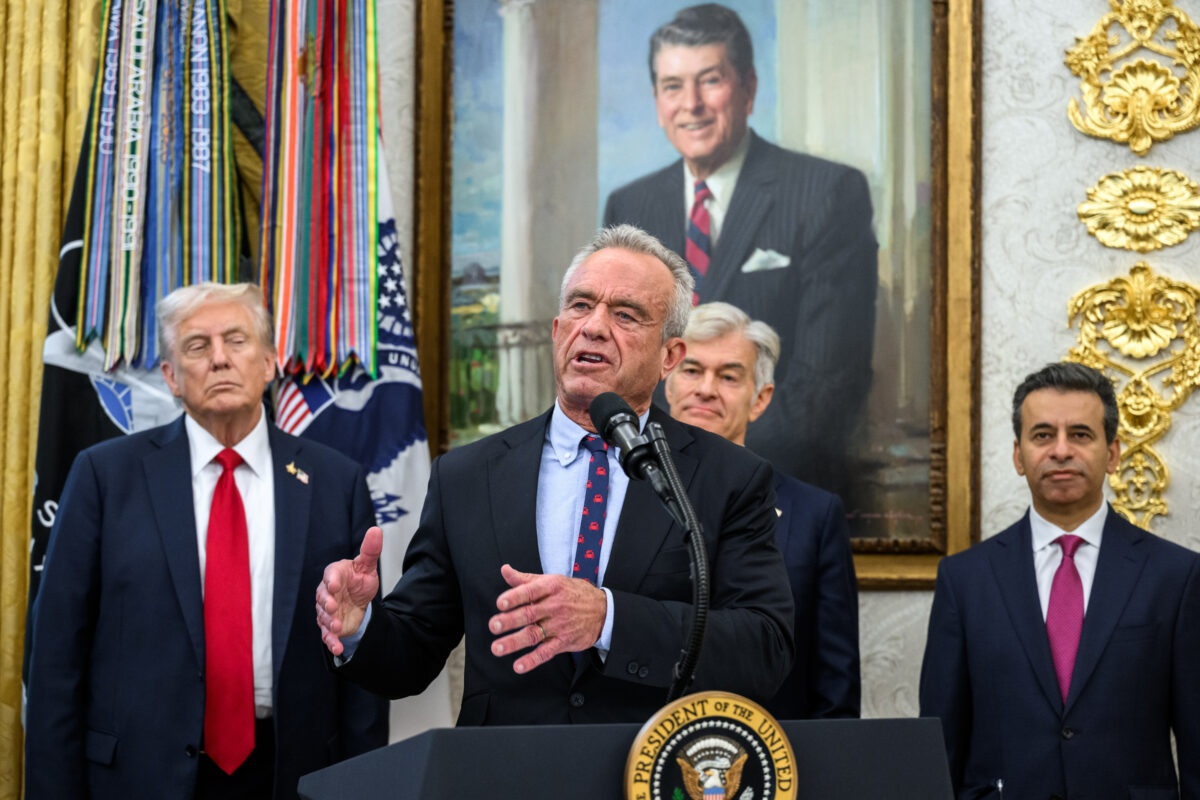
HHS Secretary Robert F. Kennedy, Jr. delivers remarks after President Donald Trump made an announcement on drug pricing, Tuesday, September 30, 2025, in the Oval Office. (Official White House Photo by Joyce N. Boghosian)
Public domain image from Wikimedia Commons: https://commons.wikimedia.org/wiki/File:P20250930JB-1484_President_Donald_Trump_makes_an_announcement_on_drug_pricing,.jpg

RFK Jr. Decertifies Kentucky Organ Procurement Organization

Say what you will about Health and Human Services Secretary Robert F. Kennedy Jr., but he definitely cares about ensuring that organ transplant medicine remains ethical, and unlike many government functionaries, he and his department are actually doing something about it. Thus, on the back of Medicare decertifying a Florida organ procurement organization for cause in 2025, the government is now decertifying the Network for Hope that operates in Kentucky and a few other states.

The government warned the network last year that its procurement procedures were ethically deficient. But the organ procurement organization never cleaned up its act despite knowing it was being scrutinized, including, apparently, for seeking to procure organs from people who had not died.

The unethical cases involve a procedure sometimes known as heart death (as opposed to brain death). In a heart-death donation, the donor is usually receiving intensive care. That medical support is withdrawn with consent and if cardiac arrest occurs — sometimes it doesn’t and the patient is then to be returned to care — after three or so minutes the patient is declared-dead because cardiopulmonary function has irreversibly stopped. After that, the procurement commences.

Read More ›

group-of-surgeons-in-operating-room-stockpack-adobe-stock-257610914-stockpack-adobestock
Group of surgeons in operating room
Image Credit: gpointstudio - Adobe Stock

Organ-Procurement Organization Lapses Threaten Trust in Transplant Medicine

The “dead donor rule” is the cement that binds the public’s trust in organ transplant medicine. Under the DDR (other than in living donations, such as of one kidney) organs cannot be procured unless donors, in the words of the Munchkins, are not merely dead but really most sincerely dead.

There are two means of declaring death. Let’s call the first “heart death,” that is an irreversible cessation of all cardio/pulmonary function. The other is popularly known as “brain death,” (death declared by neurological criteria) in which function in the whole brain and each of its constituent parts have irreversibly ceased. The key word in both means of declaring death is “irreversible.”

But something appears to have gone badly off the rails in the field of procuring organs after heart death. A long New York Times expose found cases of patients who were clearly alive when organ procurement began. At the same time, a very disturbing report by the Department of Health and Human Services contained similar findings.

First, the NYT. From “A Push for More Organ Transplants Is Putting Donors at Risk”:

Last spring at a small Alabama hospital, a team of transplant surgeons prepared to cut into Misty Hawkins.…Days earlier, she had been a vibrant 42-year-old with a playful sense of humor and a love for the Thunder Beach Motorcycle Rally. But after Ms. Hawkins choked while eating and fell into a coma, her mother decided to take her off life support and donate her organs. She was removed from a ventilator and, after 103 minutes, declared dead.

A surgeon made an incision in her chest and sawed through her breastbone. That’s when the doctors discovered her heart was beating. She appeared to be breathing. They were slicing into Ms. Hawkins while she was alive.

The horror! Why are such awful things happening?

Read More ›