Humanize From Discovery Institute's Center on Human Exceptionalism
Topic

New York Times

elderly-couple-sitting-together-on-porch-swing-one-partners-838287602-stockpack-adobestock
Elderly couple sitting together on porch swing, one partners onset of Alzheimers straining their lifelong bond and future
Image Credit: Natchaya - Adobe Stock

New York Times Ethicist Column Blesses Adultery Because Husband Has Alzheimer’s

The Ethicist column in the New York Times — a high-brow Dear Abby — has blessed adultery if one’s spouse is permanently incapacitated.

The questioner is a woman who married an older man. Her husband is now incapacitated by advancing Alzheimer’s. She is raising their child alone and has to earn a living. She still wants intimacy and asks whether it is okay for her to date. The Ethicist’s unethical response:

It’s obvious that you’ve had a lot to carry for a long time, not least caring for your husband as his Alzheimer’s has progressed. And you do owe him continued stewardship as his spouse. But given that his condition has evidently left him unable to sustain a reciprocal emotional and marital relationship, these obligations don’t mean you have to give up emotional and physical intimacy for the rest of his life. Fidelity, in a situation like yours, involves a duty of care, but with the effective loss of a companion, you’re entitled to care for yourself as well.

Read More ›
a-cannon-at-gettysburg-part-of-the-national-park-service-at-220244491-stockpack-adobestock
A cannon at Gettysburg, part of the National Park Service, at sunset
Image Credit: Country Gate Prod. - Adobe Stock

NYT Column Decries Calling the Civil War the “Civil War”

Anthony Conwright argues in the New York Times that the Civil War should not be called by that name because it never was so called during its fighting.

Conwright is angry that back on the anniversary of Appomattox, President Trump marked the event by quoting Ulysses S Grant’s magnanimous statement that the “rebels are our countrymen again.” Never mind that Grant was carrying out Lincoln’s explicit policy of magnanimity toward the rebels as a means of reuniting the country (“with malice toward none, with charity for all” and all that).

Even more ridiculously, Conwright argues that calling the conflagration the “Civil War” somehow diminishes the evil of slavery abolished after the North’s victory. From “It Wasn’t a ‘Civil War:’ It Was the Slaveholders’ Rebellion“:

As Mr. Trump and his allies try to whitewash the Jan. 6, 2021, insurrection, we should return to an older and far more accurate name for the Civil War. We should once again call it the Slaveholders’ Rebellion. If a country unquestioningly adopts language that obscures its bloodiest crimes to absolve their worst perpetrators, how can we expect successive generations to remember the new assaults on democracy without deploying equally forgiving language?

Read More ›
lost-man-in-the-middle-of-the-forest-430309368-stockpack-adobestock
Lost man in the middle of the forest.
Image Credit: pintxoman - Adobe Stock

New York Times Story Features “Tree Rights”

I recently wrote critically about a Quebec town that granted “rights to trees.” These include the rights “to life, to natural growth, to integrity, and to regeneration.” The new law has gotten a lot of media attention. Now, the New York Times has entered the fray, publishing a relatively objective story about the resolution and the nature rights movement’s history, with only one critic quoted — yours truly, from my NRO article (I was not interviewed). There is more to say about this than I included in my original post. So, let’s dig a little into the Times’ story: The small town of Terrasse-Vaudreuil, Quebec, was carved out of the forest about 75 years ago. But until recently, the trees Read More ›

close-up-of-caregiver-hands-feeding-warm-soup-to-senior-pers-1958634257-stockpack-adobestock
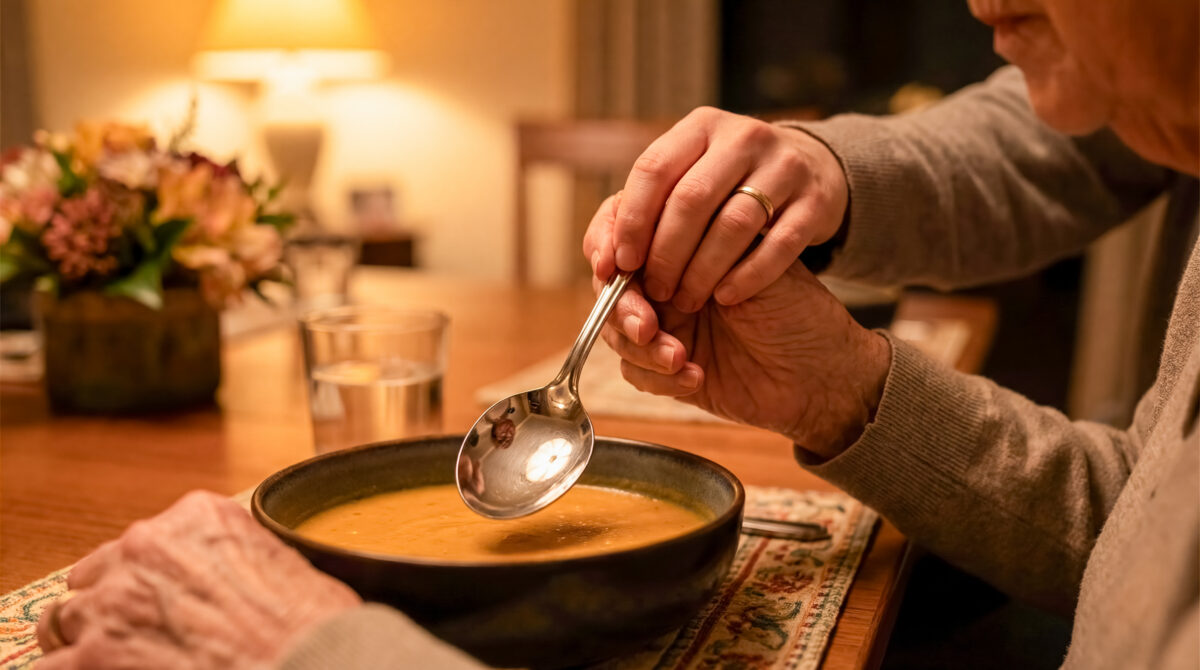
Close up of caregiver hands feeding warm soup to senior person with spoon concept of domestic hospice assistance nutritional support for elderly and compassionate care
Image Credit: Aurora Aesthetics - Adobe Stock

Dementia Patients and Death by Intentional Undernourishment

Last year, I wrote here warning about a bioethics paper that advocated restricting the amount of orally received food and water given to dementia patients, an intentional undernourishment approach that the authors labeled “minimal comfort feeding.” Well, the idea of death by intentional undernourishment has now hit the big time in the popular media with a long New York Times piece telling the story of a dementia patient who died under that regimen. I expect it to spark a national conversation. (I make a brief appearance in the piece. The reporter, Kate Raphael, could not have been more cordial and presented my views accurately. Also, she offers plenty of objections from medical professionals, so this response should not be deemed Read More ›

daughter-holding-her-mother-hand-in-hospital-stockpack-adobe-17453642-stockpack-adobestock
Daughter holding her mother hand in hospital
Image Credit: Arto - Adobe Stock

At Last! A Fair Shake for Terri Schiavo’s Brother in the New York Times

My friend Bobby Schindler, the late Terri Schiavo’s brother, is one of the kindest, humblest, most decent people I know. And yet, because he dared to stand up for the inherent value of his sister’s life and against the injustice of her court-ordered dehydration — and has continued to fight on behalf of brain-injured people and their families — journalists and bioethicists often look down their noses at him as someone just beyond the pale of sophisticated society. But in a story in this Sunday’s New York Times Magazine reciting how many allegedly unconscious patients are actually aware — I refuse to use the term “vegetative” as it is a dehumanizing denigration of intrinsic human value — much to my Read More ›

group-of-surgeons-in-operating-room-stockpack-adobe-stock-257610914-stockpack-adobestock
Group of surgeons in operating room
Image Credit: gpointstudio - Adobe Stock

Organ-Procurement Organization Lapses Threaten Trust in Transplant Medicine

The “dead donor rule” is the cement that binds the public’s trust in organ transplant medicine. Under the DDR (other than in living donations, such as of one kidney) organs cannot be procured unless donors, in the words of the Munchkins, are not merely dead but really most sincerely dead.

There are two means of declaring death. Let’s call the first “heart death,” that is an irreversible cessation of all cardio/pulmonary function. The other is popularly known as “brain death,” (death declared by neurological criteria) in which function in the whole brain and each of its constituent parts have irreversibly ceased. The key word in both means of declaring death is “irreversible.”

But something appears to have gone badly off the rails in the field of procuring organs after heart death. A long New York Times expose found cases of patients who were clearly alive when organ procurement began. At the same time, a very disturbing report by the Department of Health and Human Services contained similar findings.

First, the NYT. From “A Push for More Organ Transplants Is Putting Donors at Risk”:

Last spring at a small Alabama hospital, a team of transplant surgeons prepared to cut into Misty Hawkins.…Days earlier, she had been a vibrant 42-year-old with a playful sense of humor and a love for the Thunder Beach Motorcycle Rally. But after Ms. Hawkins choked while eating and fell into a coma, her mother decided to take her off life support and donate her organs. She was removed from a ventilator and, after 103 minutes, declared dead.

A surgeon made an incision in her chest and sawed through her breastbone. That’s when the doctors discovered her heart was beating. She appeared to be breathing. They were slicing into Ms. Hawkins while she was alive.

The horror! Why are such awful things happening?

Read More ›

PeterSinger2017WikimediaCommons
Image by Ula Zarosa at Wikimedia Commons: https://commons.wikimedia.org/wiki/File:Peter_Singer_2017.jpg

Peter Singer Endorses Geriatric Suicide in the New York Times

Peter Singer, the internationally influential emeritus bioethics professor from Princeton, is known as a moral philosopher — which in his case is an oxymoron. Not only has he repeatedly endorsed the moral propriety of infanticide, but he has also yawned at bestiality and suggested experimenting on cognitively disabled people rather than animals if they are not “persons,” among other ethically depraved opinions. Singer and another philosophy professor — Katarzyna de Lazari-Radek — just took to the opinion pages of the New York Times to endorse geriatric suicide. It seems a noted 90-year-old psychologist named Daniel Kahneman committed assisted suicide last year at one of Switzerland’s death clinics. Kahneman wasn’t seriously ill or debilitated but feared the infirmities that he believed Read More ›

artificial-insemination-stockpack-adobe-stock-49502092-stockpack-adobe_stock
artificial insemination
Image Credit: koya979 - Adobe Stock

How “Expedience Ethics” Busts Through Moral Limits

The New York Times has a long — and, I must say, generally fair — discussion of the contentious issue of embryo research. I won’t belabor most of the issues raised, but I want to highlight one aspect of the column that illustrates how some “expert ethicists” consider it a part of their job to conjure ways to bust through established moral limits.

When embryonic research first started, we were told that there would be a strict 14-day limit on researching embryos in petri dishes. At the time, I said it was all baloney, that the “ethicists” established the “14-day rule” only because embryos couldn’t be kept viable in a dish after that time. In other words, they were prohibiting something that could not yet be done. But, I predicted, once the permitted research found ways to keep embryos going beyond 14 days, the rule would be repealed. And so it came to pass.

Now, apparently, to further facilitate an anything-goes embryonic-research license — and in light of the potential that embryos can be manufactured outside of fertilization — some “ethicists” are arguing that the definition of “embryo” should be revised. From, “The Embryo Question Can’t Be Ignored” (my emphasis):

Read More ›
indoors-chicken-farm-chicken-feeding-stockpack-adobe-stock-234942101-stockpack-adobe_stock
Indoors chicken farm, chicken feeding
Image Credit: davit85 - Adobe Stock

NYT Column: Factory Farms Are Good for People and the Planet

We hear a lot from environmentalists, animal rights activists, and just plain caring people about the supposed evils of industrial farming. Neo-Luddites throw tantrums about GMOs, for example. And many commenters — including in these pages — lament the conditions in which meat animals and egg-laying hens are raised. Those are certainly legitimate concerns worthy of investigation and debate. But we also need to focus on the tremendous good humans receive from having bountiful, affordable, and nutritious food supplies, which would seem to require at least some industrial methods to achieve. Indeed, until now, these and other benefits humans receive from industrial agriculture and so-called factory farms seem to be one of those hot potato topics that we are not allowed to Read More ›

team-of-doctors-preparing-for-surgery-patient-pov-adobe-stock
Team of doctors preparing for surgery, patient POV
Image Credit: Joshua A/peopleimages.com - Adobe Stock

No, Doctors Shouldn’t Make Treatment Decisions for Incompetent Patients

Cardiologist and New York Times columnist Sandeep Jauhar has published a piece advocating that doctors and bioethicists be empowered to force treatment on some patients. He writes in the context of wanting to compel hospitalization on a schizophrenic patient with serious heart problems. From "Doctors Need a Better Way to Treat Patients Without Their Consent:" Read More ›