Humanize From Discovery Institute's Center on Human Exceptionalism
Topic

Robert F. Kennedy Jr.

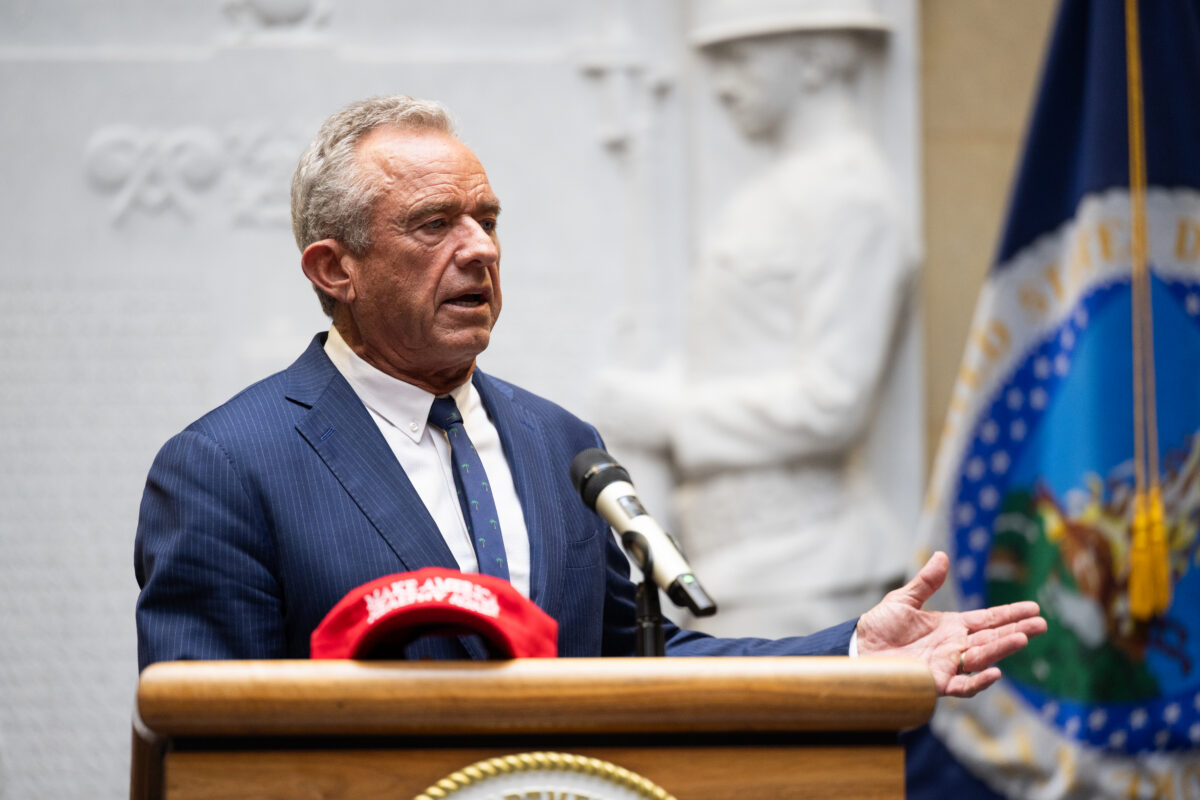
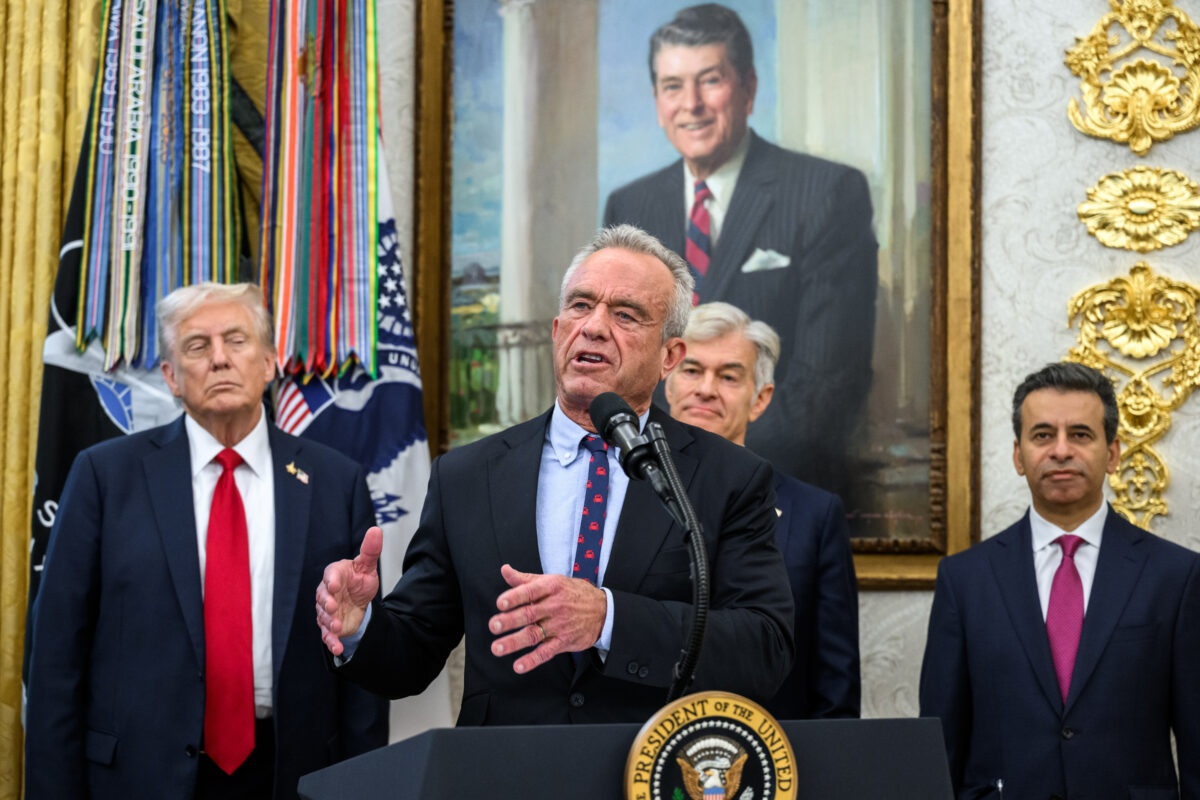
SecretaryBrookeRollinsannouncestheUSDAscommencement
U.S. Secretary of Health and Human Services Robert F. Kennedy Jr delivered some remarks during the announcement of USDA’s commencement of the Dietary Guidelines for Americans Strategic Partnerships and an update on the impending Stocking Standards final rule, a rule that holds any retailer interested in accepting Supplemental Nutrition Assistance Program (SNAP) benefits accountable to a higher minimum standard of staple food stocking requirements. Additionally, Secretary Rollins will sign additional SNAP food restriction waivers, USDA Headquarters, Washington D.C., March 4, 2026. (USDA photo by Christophe Paul)
USDA Image at Wikimedia Commons: https://commons.wikimedia.org/wiki/File:Secretary_Brooke_Rollins_announces_the_USDA%E2%80%99s_commencement_of_the_Dietary_Guidelines_for_Americans_Strategic_Partnerships_alongside_HHS_Secretary_Kennedy_and_Dr_Ben_Carson_(20260304-USDA-OSEC-CDP-1583).jpg

RFK Criticized for Disrespecting Roadkill

These days, it seems that everything is about bioethics. Case in point: A zoologist named Sam Zeveloff has criticized RFK Jr. in Stat News for disrespecting a dead raccoon back in 2001 by allegedly dissecting its penis. This act, the emeritus professor claims, raises “critical questions” that must be addressed.

Oh my. One wonders about the possible moral stakes of this historical cadaveric mutilation.

Such phallus-collecting, we are told by Zeveloff, is fine so long as it’s done for a valid scientific or educational purpose. In fact, the author brags that he has collected raccoon phalluses himself, some of which are displayed at the Icelandic Phallological Museum. Okaaay.

But Kennedy’s cadaveric collecting wasn’t, from a bioethical standpoint, properly “scientific”:

If Kennedy collected a racoon specimen without a defined scientific or educational purpose, the ethical justification becomes less clear. Indeed, the public has no idea about why he would stop a car filled with his family members and cut out a raccoon’s penis from a carcass.

Read More ›
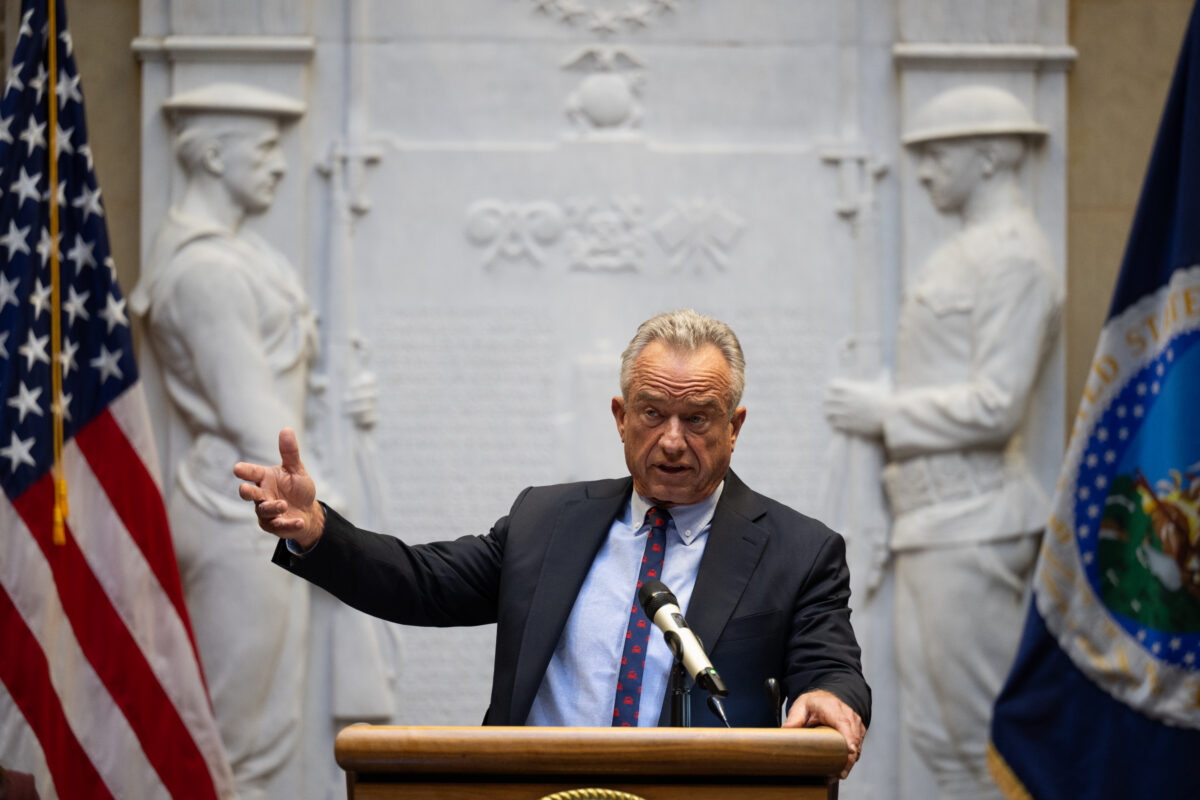
2026NationalAgDayEventonMarch24202620260324-USDA-
U.S. Department of Health and Human Services Secretary Robert F. Kennedy, Jr. delivers some remarks during the 2026 Ag Day celebration ceremony at the USDA Headquarters, Washington D.C., March 29, 2026. Ag Day is a time when producers, agricultural associations, corporations, universities, government agencies and countless others across America gather to recognize and celebrate the abundance provided by American agriculture. As the world population soars, there is even greater demand for the food, fiber and renewable resources produced in the United States. The National Ag Day program believes that every American should understand how food, fiber and renewable resource products are produced, value the essential role of agriculture in maintaining a strong economy, appreciate the role agriculture plays in providing safe, abundant and affordable products and acknowledge and consider career opportunities in the agriculture, food, fiber and renewable resource industries. Agriculture provides almost everything we eat, use and wear on a daily basis, and is increasingly contributing to fuel and other bio-products. Each year, members of the agricultural industry gather together to promote American agriculture. This effort helps educate millions of consumers. (USDA photo by Christophe Paul)
Public domain image from Wikimedia Commons: https://commons.wikimedia.org/wiki/File:2026_National_Ag_Day_Event_on_March_24,_2026_(20260324-USDA-OSEC-CDP-3412).jpg

RFK Jr. Calls Assisted Suicide Laws “Abhorrent”

Assisted suicide is not discussed much at the federal level. But at a recent Senate committee hearing, Senator James Lankford (R., Okla.) asked HHS Secretary Robert F. Kennedy Jr. about his thoughts on assisted suicide. Kennedy was unequivocal (starting at minute 3:30): Lankford: I want to switch to an issue we have not had a lot of time to talk about and that is assisted suicide. We now have three states, California, Colorado, and Vermont that disability groups are filing against some of the assisted suicide laws because it seems to target those with disabilities and the Americans with Disabilities Act passed in 1990, that act has worked to protect those with disabilities, not incentivize them to take their own Read More ›

medical-research-scientist-examines-laboratory-mice-and-look-166977106-stockpack-adobestock
Medical Research Scientist Examines Laboratory Mice and Looks on Tissue Samples under Microscope. She Works in a Light Laboratory.
Image Credit: Gorodenkoff - Adobe Stock

For MAHA’s Sake Don’t Eliminate Animal Research

Secretary of Health and Human Services Robert F. Kennedy Jr. made big news recently when he declared that he wanted to eliminate federal funding for research on primates and eventually end all government support for animal experimentation. RFK Jr. says he’ll work with federal agencies to wind down animal testing. One can certainly understand his reasons. Animal suffering makes anyone with a conscience flinch in empathetic revulsion.

But scientists do not engage these methodologies out of sadistic purpose. Rather, their goals are to find new medical treatments, cure diseases, and generally reduce human (and animal) suffering. Indeed, without animal research, the many medical and veterinary advances achieved since World War II would have been impossible. That is why we must think about this important moral issue and not just “feel.”

Most animal work involves basic research—investigations about how bodily systems function. Here’s the story of just one such use that resulted in tremendous reduction in human suffering.

Years ago, Dr. Edward Taub hypothesized that brain function could exhibit greater plasticity than then believed. To determine whether he was right, the nerves in monkeys’ forelimbs were severed surgically. Taub’s purpose was to train the animals to reuse their numb forelimbs; research he hoped would prove valuable in ultimately rehabilitating human stroke patients.

Read More ›
woman-veterinarian-holding-a-little-macaque-monkey-in-the-mo-361977048-stockpack-adobestock
Woman veterinarian holding a little macaque monkey in the monkey cage.
Image Credit: Achirawich - Adobe Stock

RFK Jr. Should Not Eliminate Research on Primates

I rise to second the opinion of neurologist and university professor Cory Miller, published here on NRO, opposing Secretary of Health and Human Services Robert F. Kennedy Jr.’s apparent intention to end all research on primates at the Centers for Disease Control and Prevention. Miller writes:

Reports that the Centers for Disease Control and Prevention (CDC) plans to end research involving monkeys — a move framed as modernization — strikes at the heart of America’s biomedical capacity at the very moment global competitors are expanding theirs.

This is the latest step in Health and Human Services Secretary Robert F. Kennedy Jr.’s plan to phase out animal research in the U.S., an ideologically driven effort that sidesteps scientific evidence by exploiting our understandable desire to reduce animal suffering. And make no mistake, ending research with monkeys is not the end goal. It is only the beginning.

Yes, we should reduce animal testing as much as is practicable. But we should use alternatives, as Miller puts it, as a “complement” to animal studies, not a total replacement. Sure, using animals to test cosmetics and the like can probably be eliminated safely. And by all means, use cell lines, AI computer programs, and other alternatives as much as possible to reduce animal use, consistent with protecting human safety.

Read More ›
Robert F Kennedy sworn in speech Wikimedia Commons
Public Domain image from the White House, located at Wikimedia Commons: https://commons.wikimedia.org/wiki/File:P20250213MR-0758.jpg

RFK Jr. Endorses Measles Vaccine

With Texas experiencing a measles outbreak, some might expect RFK to play down vaccines or damn them with faint praise. Nope. He wrote an op-ed piece for Fox News praising the MMR vaccines — in a manner consistent with his belief that the decision to inoculate should be a matter of choice. From “Measles Outbreak Is Call to Action for All of Us:” Parents play a pivotal role in safeguarding their children’s health. All parents should consult with their healthcare providers to understand their options to get the MMR vaccine. The decision to vaccinate is a personal one. Vaccines not only protect individual children from measles, but also contribute to community immunity, protecting those who are unable to be vaccinated due to Read More ›