Humanize From Discovery Institute's Center on Human Exceptionalism
Category

Bioethics

YouTube Episode Thumbnails under 2 MB (10)

Does Brain Death Actually Exist? The Case Against Brain Death with Dr. Paul Byrne

What if we have been getting death wrong? For decades, modern medicine has relied on the concept of brain death, the idea that when the brain irreversibly stops functioning, the person has died. But what if that is not true? In this episode, I sit down with Dr. Paul Byrne, neonatologist, Clinical Professor of Pediatrics, past president of the Catholic Medical Association, and one of the leading critics of brain death, for a conversation that challenges one of the most fundamental assumptions in modern medicine. Early in his career, Dr. Byrne encountered a patient labeled “consistent with cerebral death.” He continued treatment. That patient went on to live, marry, and have children. Since then, Dr. Byrne has spent over 40 Read More ›
YouTube Episode Thumbnails under 2 MB (9)

If We’re Just Matter, Why Do We Matter? The Crisis of Human Dignity with Dr. Ashley Fernandes

If we’re just matter, why do we matter? Modern bioethics is built on a question most people never stop to ask: What is a human being? Because the answer to that question isn’t abstract, it determines how we treat the most vulnerable people among us. From IVF and embryo selection, to assisted suicide and end-of-life care, to gene editing and transhumanism. We are already making decisions about who counts and who doesn’t. In this episode, I sit down with Dr. Ashley Fernandes, a physician, bioethicist, Clinical Professor of Pediatrics at Nationwide Children’s Hospital and the Associate Director of the Center for Bioethics at the Ohio State University, College of Medicine — to expose the deeper philosophical divide shaping modern medicine: Read More ›

Screenshot-2026-04-09-111240

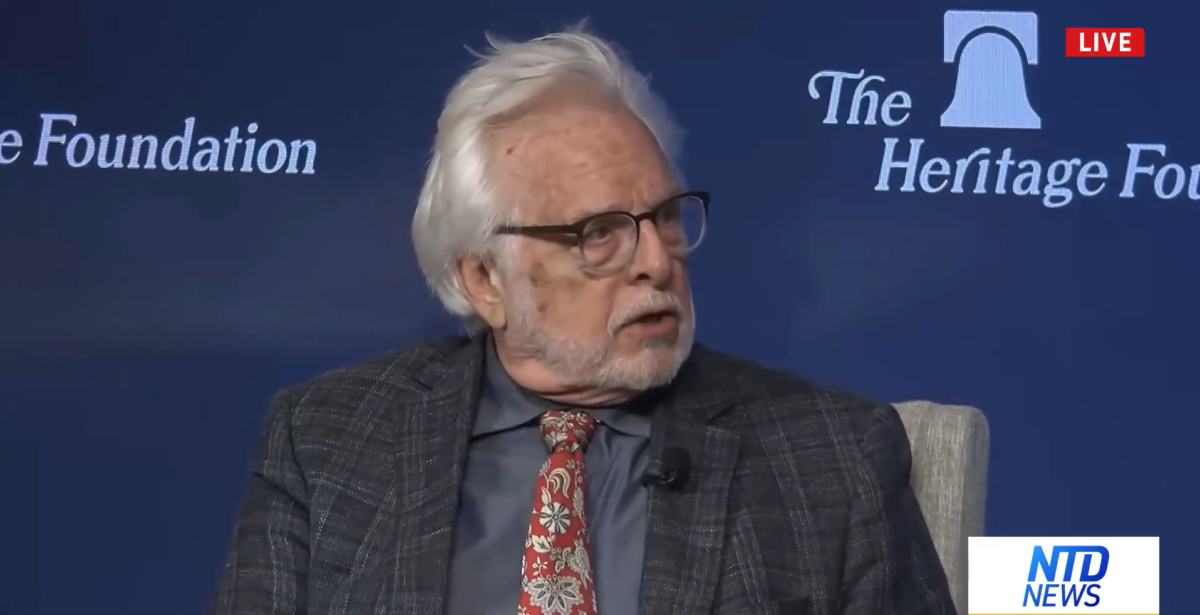
Watch: Wesley J. Smith Participates in Heritage Foundation Panel Discussion on Chinese Organ Harvesting

On April 7, Wesley J. Smith participated in a Heritage Foundation-hosted discussion titled, “Organ Harvesting: Communist China’s Hideous Shop of Horrors.” He was joined by Discovery Institute Senior Fellow Jay Richards, Representative Chris Smith (R–NJ), Jan Jekielek (Senior Editor of The Epoch Times, host of “American Thought Leaders”), Ethan Gutmann, and Bob Moffit. While the majority of the conversation centered on the human rights abuses occurring in China, Smith warned the audience not to be blind to similar atrocities happening here in the West: [T]his is about what’s happening in China — let’s call that a 108-degree fever. But what’s happening in the West, along similar lines, is a 102-degree fever. So you have bioethicists in the most notable medical and Read More ›

scary-surgery-stockpack-adobe-stock-68045321-stockpack-adobestock
Scary surgery
Image Credit: Dario Lo Presti - Adobe Stock

Wesley J. Smith to Participate in Heritage Foundation Discussion of China’s Organ Harvesting

On April 7, 2026, the Heritage Foundation will host a discussion among experts on the Chinese Communist Party’s practice of forced organ harvesting on its citizens. Wesley J. Smith, Chair and Senior Fellow of the Center on Human Exceptionalism and host of the Humanize podcast, will be among the list of panelists. Also presenting will be long-time Discovery Institute Senior Fellow Jay Richards. Other panelists include Representative Chris Smith (R–NJ), Jan Jekielek (Senior Editor of The Epoch Times, host of “American Thought Leaders”), Ethan Gutmann, and Bob Moffit. From The Heritage Foundation event description: They will examine reports of forced organ harvesting associated with the CCP, explore the broader human rights implications, and review current legislative initiatives in the U.S. Read More ›

YouTube Episode Thumbnails under 2 MB (9)

Margaret Sanger: Did Birth Control Rewire Feminism and Spark the Sexual Revolution? with Dr. Angela Franks

Did birth control give women freedom or did it fundamentally change feminism itself? Before the 1960s sexual revolution, before the Pill became mainstream, Margaret Sanger was already advancing a radical idea: that women could not be free unless their fertility was controlled. She didn’t just promote contraception, she reframed it as essential to freedom, autonomy, and progress. But what if that idea didn’t actually expand freedom…what if it redefined womanhood? In this episode of Bioethics Babe, I sit down with Dr. Angela Franks, theologian, author of Margaret Sanger’s Eugenic Legacy: The Control of Female Fertility, to uncover the deeper story behind the birth control movement. We explore: This isn’t just about history. It’s about the ideas that shaped our culture Read More ›

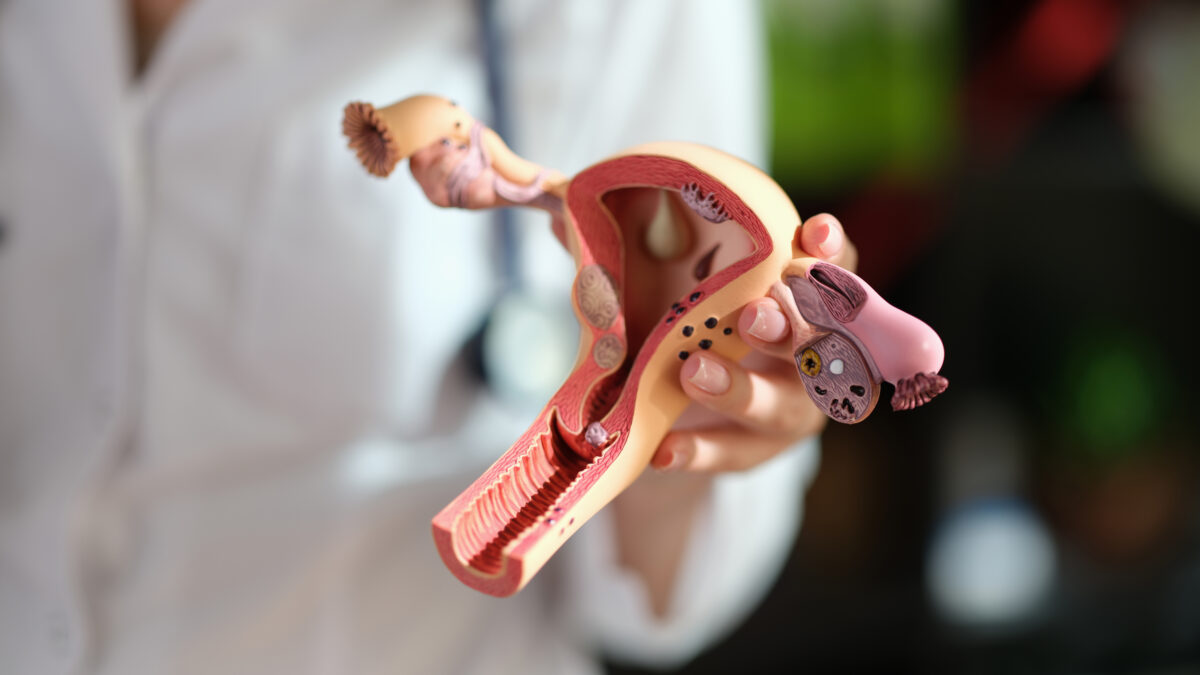
woman-gynecologist-holding-anatomical-model-of-uterus-and-ov-600295936-stockpack-adobestock
Woman gynecologist holding anatomical model of uterus and ovaries
Image Credit: megaflopp - Adobe Stock

Human Uterus Kept Functioning Outside the Body for Experiments

Brave new world alert! Scientists used a machine deployed in organ transplant medicine to keep a surgically removed human uterus alive for one day, furthering the goal of being able to use donated uteri experimentally over long periods of time, including for gestation. From the MIT Technology story: The team members want to keep donated human uteruses alive long enough to see a full menstrual cycle. They hope this will help them study diseases of the uterus and learn more about how embryos burrow their way into the organ’s lining at the start of a pregnancy. They also hope that future iterations of their device might one day sustain the full gestation of a human fetus. The machine is technically Read More ›

YouTube Episode Thumbnails under 2 MB (6)

Do Rape, Incest, and Life of the Mother Justify Abortion? A Bioethicist Responds with Fr. Tad Pacholczyk

Do cases of rape, incest, or when the mother’s life is in jeopardy justify abortion? These are the hardest questions in the abortion debate: emotionally charged, deeply tragic, and often used to challenge the pro-life position. But how should we think about these cases from a medical, ethical, and human perspective? In this episode of Bioethics Babe, I sit down with Fr. Tad Pacholczyk, priest, neuroscientist, and Senior Ethicist at the National Catholic Bioethics Center, to take on these difficult questions head-on. We explore: If you’ve ever wondered how to think clearly and compassionately about the hardest cases, tune in to this discussion. For Episode Resources, please visit the episode page here. For more information, the latest episodes, and additional Read More ›

chinese-flags-on-barbed-wire-wall-in-kashgar-kashi-xinjiang-279388155-stockpack-adobestock
Chinese flags on barbed wire wall in Kashgar (Kashi), Xinjiang, China.
Image Credit: Jonathan Densford - Adobe Stock

Article in The Lancet Decries Bioethics Conference for Not Condemning Genocide

An article in The Lancet decries the recent 17th World Conference on Bioethics, Medical Ethics, and Health Law for failing to condemn “genocide.” Of course, the authors are referencing Israel’s self-defense in Gaza. From, “Silence on Genocide at the World Conference on Bioethics:” Between Nov 24 and Nov 27, 2025, the International Chair in Bioethics held its 17th World Conference on Bioethics, Medical Ethics, and Health Law in Ljubljana, Slovenia. Despite being hosted in a nation whose President has vocally condemned the “genocide in Gaza” at the UN, the conference stood in stark contrast to its setting. No scheduled sessions discussed the ongoing humanitarian catastrophe, representing a profound disconnect between the event’s location and its content… If an organisation claiming Read More ›

Episode 23

Infertility in the Age of IVF: Can Life Still Be Fruitful? with Leigh Snead

In an age of IVF, embryo selection, and a rapidly expanding fertility industry, couples facing infertility are often given a clear message: if you want a child badly enough, technology can make it happen. But what if that’s not the whole story? What if infertility is not just a medical condition to be solved but a profound personal, relational, and even spiritual trial? And what if a life without biological children can still be deeply meaningful and truly fruitful? In this episode of Bioethics Babe, I sit down with Leigh Snead, author of Infertile but Fruitful, fellow with the Catholic Association, and co-host of the nationally syndicated show Conversations with Consequences to explore the deeper questions surrounding infertility in the Read More ›

Ep. 22 Thumbnail

Are Some “Brain Dead” Patients Actually Alive? A Neurologist Examines Brain Death Criteria with Dr. Christopher DeCock

What is death? It’s the moment a human being ceases to exist. But when is that exactly? We tend to think we know the answer, but what if the question is not that simple, especially when it comes to brain death? In this episode of Bioethics Babe, pediatric neurologist Dr. Christopher DeCock examines one of the most important questions in medicine, law, and bioethics: What if the medical criteria used to declare someone brain dead are not actually proving what we think they are proving? Current brain death determinations are largely based on clinical brain death criteria developed by the American Academy of Neurology, including coma, absence of brainstem reflexes, and apnea testing. But do these tests truly demonstrate the Read More ›