Humanize From Discovery Institute's Center on Human Exceptionalism
Category

Bioethics

chinese-flags-on-barbed-wire-wall-in-kashgar-kashi-xinjiang-279388155-stockpack-adobestock
Chinese flags on barbed wire wall in Kashgar (Kashi), Xinjiang, China.
Image Credit: Jonathan Densford - Adobe Stock

Article in The Lancet Decries Bioethics Conference for Not Condemning Genocide

An article in The Lancet decries the recent 17th World Conference on Bioethics, Medical Ethics, and Health Law for failing to condemn “genocide.” Of course, the authors are referencing Israel’s self-defense in Gaza. From, “Silence on Genocide at the World Conference on Bioethics:” Between Nov 24 and Nov 27, 2025, the International Chair in Bioethics held its 17th World Conference on Bioethics, Medical Ethics, and Health Law in Ljubljana, Slovenia. Despite being hosted in a nation whose President has vocally condemned the “genocide in Gaza” at the UN, the conference stood in stark contrast to its setting. No scheduled sessions discussed the ongoing humanitarian catastrophe, representing a profound disconnect between the event’s location and its content… If an organisation claiming Read More ›
Episode 23

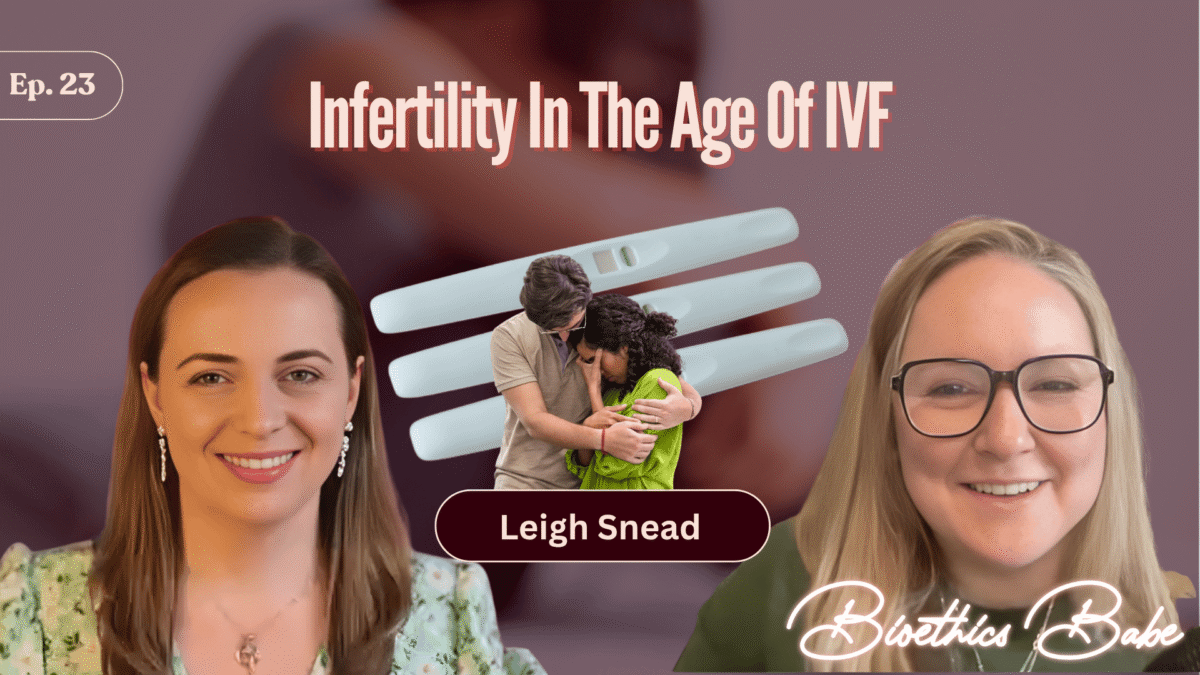
Infertility in the Age of IVF: Can Life Still Be Fruitful? with Leigh Snead

In an age of IVF, embryo selection, and a rapidly expanding fertility industry, couples facing infertility are often given a clear message: if you want a child badly enough, technology can make it happen. But what if that’s not the whole story? What if infertility is not just a medical condition to be solved but a profound personal, relational, and even spiritual trial? And what if a life without biological children can still be deeply meaningful and truly fruitful? In this episode of Bioethics Babe, I sit down with Leigh Snead, author of Infertile but Fruitful, fellow with the Catholic Association, and co-host of the nationally syndicated show Conversations with Consequences to explore the deeper questions surrounding infertility in the Read More ›

Ep. 22 Thumbnail

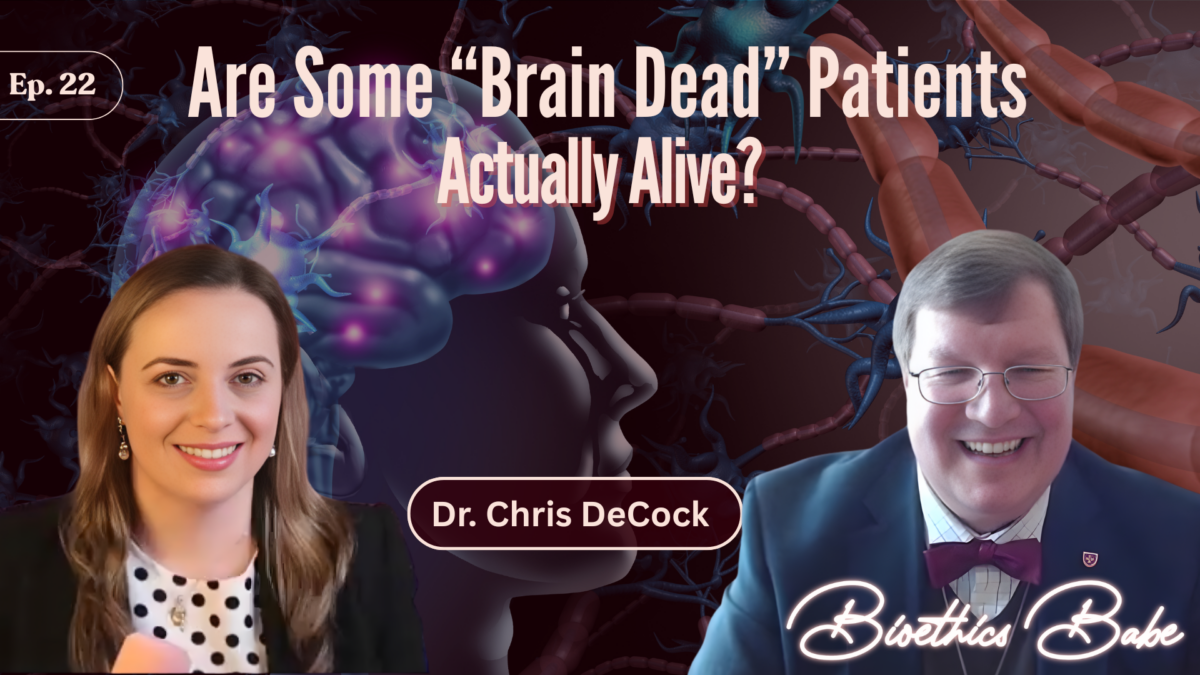
Are Some “Brain Dead” Patients Actually Alive? A Neurologist Examines Brain Death Criteria with Dr. Christopher DeCock

What is death? It’s the moment a human being ceases to exist. But when is that exactly? We tend to think we know the answer, but what if the question is not that simple, especially when it comes to brain death? In this episode of Bioethics Babe, pediatric neurologist Dr. Christopher DeCock examines one of the most important questions in medicine, law, and bioethics: What if the medical criteria used to declare someone brain dead are not actually proving what we think they are proving? Current brain death determinations are largely based on clinical brain death criteria developed by the American Academy of Neurology, including coma, absence of brainstem reflexes, and apnea testing. But do these tests truly demonstrate the Read More ›

YouTube Thumbnails, under 2 MB (5)

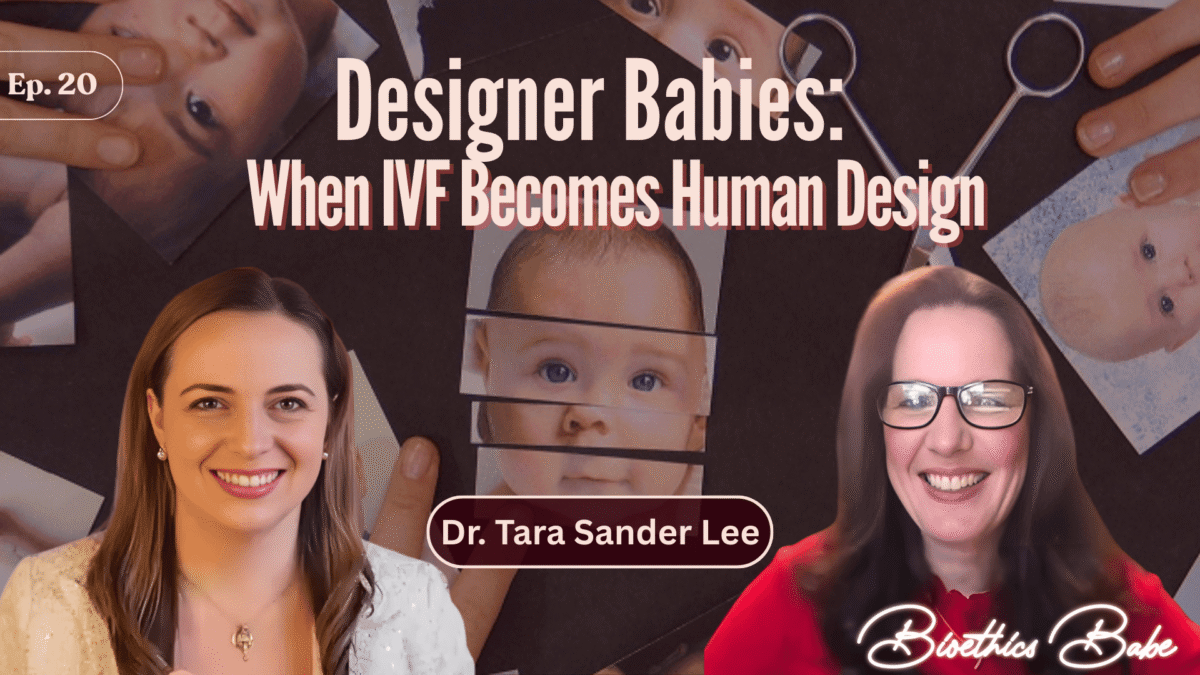
Designer Babies: When IVF Becomes Human Design with Dr. Tara Sander Lee

IVF was introduced as a way to address infertility, even though it is fraught with ethical problems. But today, it increasingly involves grading embryos, screening genetic traits, and deciding which embryos are chosen. Are we entering an era where reproduction becomes human design? In this episode, Harvard-trained biochemist Tara Sander Lee, Ph.D., explains how modern IVF increasingly involves eugenic practices. We examine: As IVF expands beyond infertility “treatment” and into optimization, urgent questions emerge about human dignity, disability, and the moral limits of reproductive technology. This is a conversation about science, power, and whether medicine is meant to heal people or to redesign them. For Episode Resources, please visit the episode page here. For more information, the latest episodes, and Read More ›

YouTube Thumbnails, under 2 MB (2)

Is Love All You Need? Truth, Intention, and Moral Action with Fr. James Brent, OP

Is love really all you need to make something ethical? In a culture that treats good intentions as the highest moral standard, this episode asks a harder and more important question: Can love be ethical without truth? In this episode of Bioethics Babe, I’m joined by Fr. James Dominic Brent, OP, a Dominican priest and philosopher in the Thomistic tradition, to examine why sincerity alone isn’t enough in moral decision-making, especially in medicine, relationships, and family life. Drawing on Catholic moral theology and the philosophy of St. Thomas Aquinas, Fr. Brent explains: From IVF to euthanasia to sexual ethics, consent, and modern ideas of affirmation, this conversation challenges the assumption that “if it’s done out of love, it can’t be Read More ›

frustrated-young-woman-is-suffering-after-miscarriage-she-is-205790747-stockpack-adobestock
Frustrated young woman is suffering after miscarriage. She is looking at ultrasound pictures of her unborn baby and crying. Man is sitting and embracing her with love. Copy space
Image Credit: Yakobchuk Olena - Adobe Stock

An Ethical Alternative to IVF

Approximately 10-15% of U.S. couples of reproductive age experience infertility. One response is to pursue in vitro fertilization (IVF), which is fraught with many negative ethical and practical implications. Another way is to get to the root cause of infertility. Shouldn’t that be the MAHA way? President Trump expanded access to IVF with his February 2025 executive order. In October, he lowered costs for IVF and other fertility treatments. While IVF does indeed “create” more babies, it comes at a steep physical, emotional, and ethical cost for couples (for an in-depth discussion of these and other issues relating to IVF, please see my podcast episode with Emma Waters on Bioethics Babe). At its heart, IVF circumvents infertility by moving procreation Read More ›

Episode 16 thumbnails

Vaccines, Trust, and Informed Consent After COVID with Dr. Jay Richards

In a post-COVID world, families are asking harder questions about vaccines and those questions deserve serious, ethical answers. In this episode of Bioethics Babe, I’m joined by Jay Richards, Vice President of Social and Domestic Policy and the William E. Simon Senior Research Fellow in American Principles and Public Policy at The Heritage Foundation, where he also chairs the Restoring American Wellness initiative. He is also a senior fellow at Discovery Institute. We explore how families can think clearly and ethically about vaccines after COVID. This conversation covers informed consent, risk-benefit analysis, parental responsibility, the updated CDC childhood immunization schedule, and the growing crisis of trust in public health institutions. This episode is for parents, healthcare professionals, policymakers, and anyone Read More ›

embryo-development-examination-microscopes-enable-studying-t-643751207-stockpack-adobestock
Embryo development examination: Microscopes enable studying the proces
Image Credit: luchschenF - Adobe Stock

NIH Bans Funding of Fetal Tissue Research

After restricting funding for primate research for ethical reasons, the National Institutes of Health has followed up by banning funding of fetal tissue research. From the NIH press release:

The National Institutes of Health (NIH) today announced a new policy ending the use of human fetal tissue in NIH-supported research, marking a significant milestone in the Trump Administration’s efforts to modernize biomedical science and accelerate innovate.

Effective immediately, NIH funds will no longer be used to support research involving human fetal tissue from elective abortions. The policy applies across the NIH Intramural Research Program and all NIH-supported extramural research, including grants, cooperative agreements, other transaction awards, and research and development contracts.

We have to remember the gruesomeness of some of this research: For example, the experiments in which the scalps of 20-week aborted fetuses were grafted onto rodents.

Read More ›
Episode 15 Highlights thumbnail

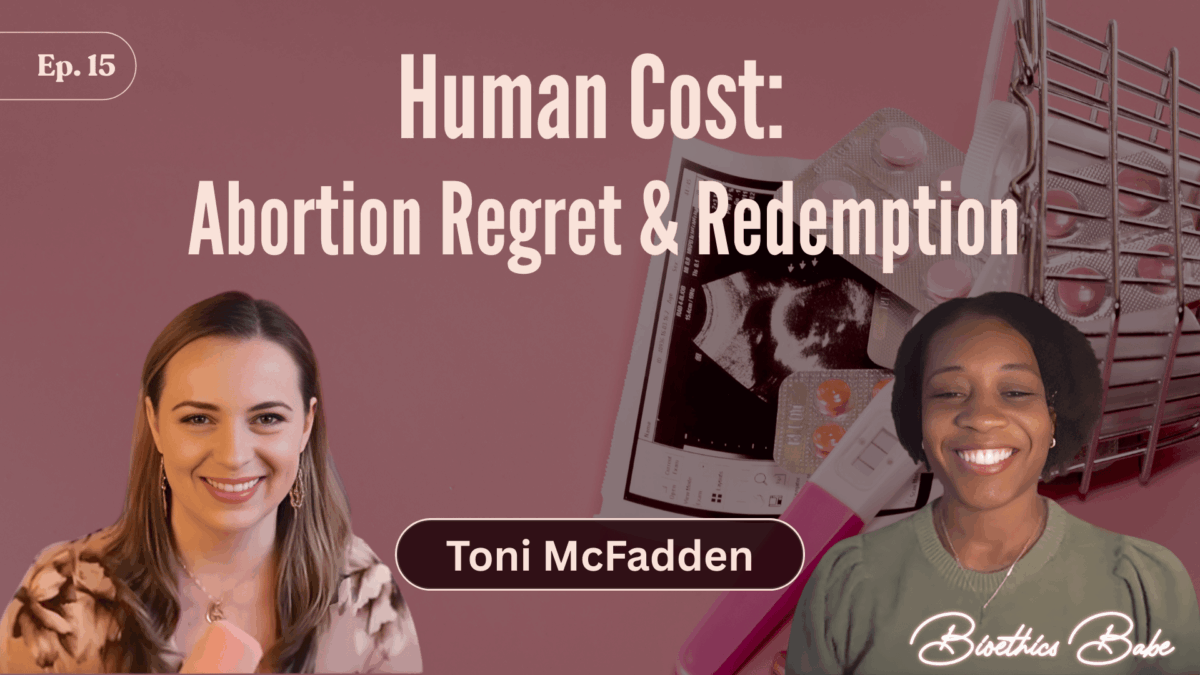
The Human Cost: Abortion Regret and Redemption After My Chemical Abortion with Toni McFadden

What is the real human cost of abortion—especially chemical abortion? In this powerful and deeply personal conversation, Toni McFadden shares her abortion story with unflinching honesty. As a teenager facing an unplanned pregnancy, Toni had a chemical abortion believing it was the only way out. What followed wasn’t relief—but years of silence, trauma, emotional grief, and spiritual brokenness. Toni recounts what the abortion pill experience was really like, the isolation she felt, the long road of unhealed pain, and how abortion affected not only her—but also the child’s father, her future marriage, and her family. She also shares how a slow, unexpected encounter with faith led to real post-abortion healing, forgiveness, and redemption. This episode confronts the human cost of Read More ›

team-of-surgeons-operating-stockpack-adobe-stock-150608240-stockpack-adobestock
Team of Surgeons Operating.
Image Credit: santypan - Adobe Stock

Bioethicist: Let Surgeons Kill Patients During Organ Harvesting

The “dead donor rule” (DDR) is a legal and ethical mandate that requires vital organ donors to be truly dead before their body parts are procured. A corollary to the rule holds that people cannot be killed for their organs. The DDR promotes trust in the system and protects the vulnerable — but is flexible enough to permit living donations of one kidney and parts of a liver from altruistic donors. Utilitarian bioethicists have long argued against the DDR and its corollary based on the notion that killing those who are dying or want to donate will relieve the suffering of people who want to live and need an organ. And here we go again. The Journal of Medical Ethics Read More ›