Bioethicist: “Queer the Genome” Through Same-Sex Reproduction
The mainstream bioethics movement aims to destroy human exceptionalism and Judeo-Christian morality as the philosophical foundations of society. Toward that end, the academic discourse repeatedly revels in the transgressive as bioethicists take to the most influential journals to advocate destroying “natural limits” and maximizing concepts of personal autonomy that are destructive of social cohesion. Latest example: An article published in Oxford’s Journal of Medical Ethics argues in favor of biotechnologically altering ova to permit lesbians to engage in same-sex biological reproduction. Bioethicist Adrian Villalba writes in “Queering the Genome“: The potential alteration of genomic imprinting opens the door for an oocyte [egg] to exhibit characteristics similar to a sperm, allowing it to fertilise another egg. This can be achieved by Read More ›

Bioethicists Get Legacy of Terri Schiavo Death Wrong
Twenty years ago today, Terri Schiavo’s feeding tube was withdrawn with court approval, commencing a cruel deprivation of sustenance that resulted in her death by dehydration 13 days later. For those who may not remember, the case became the most hotly contested bioethics issue since Roe v. Wade as Terri’s husband Michael fought in courts and in the media with her parents and siblings over his desire to remove all Terri’s food and fluids. In the end, he won — and Terri died. Now, two bioethicists on the influential Hastings Center blog decry the case as wrongly brought. They get some facts wrong and omit crucial information — like that Michael was living with another woman with whom he fathered Read More ›

Bioethicist Urges Hospitals to Defy ICE
Mainstream bioethics discourse is often just progressive politics by a higher-brow name. Now, the Hastings Center — the world’s most influential bioethics think tank — has published an advocacy essay by Loyola University bioethicist Mark G. Kuczewski, who urges his colleagues to convince hospital administrators to thwart the attempts of Immigration and Customs Enforcement to arrest illegal aliens at their institutions. Kuczewski laments the “fear” that the enforcement of immigration law is supposedly instilling in “immigrant communities,” somehow forgetting to note that whom he is really discussing are not immigrants in general but those here illegally. From “Supporting Patients and Students Who Are Immigrants: What to Do and Why Most Bioethicists Won’t Do It”: A devastating wave of fear now permeates immigrant communities. The rhetoric Read More ›

Will We Starve Dementia Patients in Slow Motion?
Moves are afoot in bioethics to require caregivers to withhold food and water by mouth from a patient made incompetent by dementia if that patient, while compos mentis, has signed such a request — and even if the patient willingly eats, enjoys meals, or asks for food. It is sometimes called “voluntary stop eating and drinking [VSED] by advance directive,” in the parlance.
I have frequently criticized VSED by directive as inhumane to the patient, cruel to caregivers (as it forces them to starve people to death), and designed to open the door to lethally jabbing those with advanced dementia as the less onerous alternative to their being made to starve to death.
Now, as supposedly some form of compromise, there is a proposal on the table to barely feed — i.e., malnourish — dementia patients who have previously signed such a directive. From, “Mr. Smith Has No Mealtimes,” published in the Journal of Pain and Symptom Management (citations omitted):
Read More ›Minimal Comfort Feeding (MCF)…is the provision of only enough oral nutrition and hydration to ensure comfort. With MCF, eating and drinking is not scheduled; rather, caretakers offer food and liquids only in response to signs of hunger and thirst. Patients are neither wakened for regular mealtimes nor encouraged to eat or drink. Instead, they are offered frequent, fastidious mouth care, continued social contact, therapeutic touch, sensory distraction, and medications to relieve distress associated with apparent thirst or hunger before being provided with minimal amounts of liquid or food.

Pig-to-Human Kidney Transplant Offers Hope — and an Ethical Solution
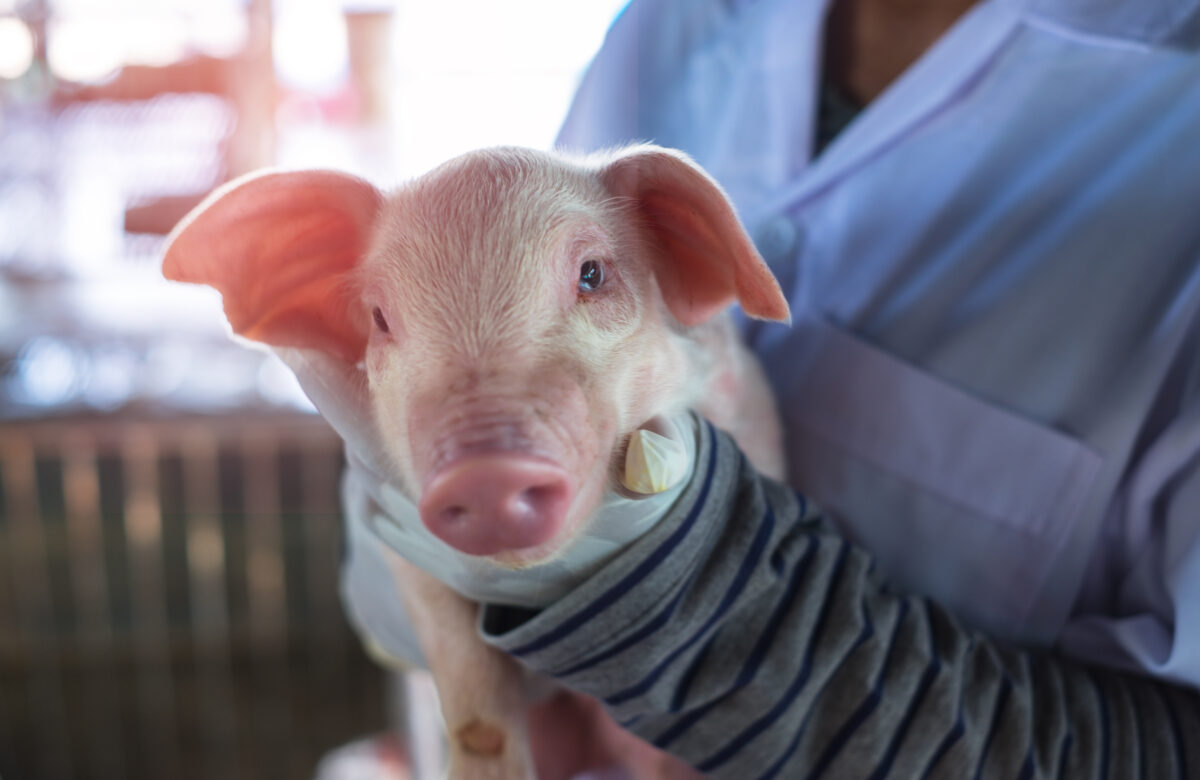
With so many people on the organ transplant waiting list, the ethics of organ donation have begun to buckle. These proposals are not only unethical, in my opinion; in some cases they also treat donors as objects rather than subjects. Each and any of them could undermine the public’s already thin trust in the organ transplant system, which would be a catastrophe. But an ethical way forward has also been researched assiduously, and it is beginning to bear fruit: xenotransplantation, that is, the use of pigs’ organs, genetically altered to be more compatible with humans. Early experiments offer cause for optimism. Recently, a woman who was dying of kidney failure received a pig kidney, and she seems to be doing well. Read More ›

Only Bioethicists Can Prevent Global Warming
The bioethics movement has always had power ambitions beyond wrestling with health policy and medical ethics. Indeed, for years, the mainstreamers have been seeking to interpose themselves into the global-warming controversy.
The Hastings Center — the beating heart of the bioethics establishment — has been leading the charge to so expand the sector’s influence. The center just published a call to arms to fight global warming by a medical ethics professor emeritus, advocating that bioethicists be at the center of the climate-change fray.
After praising the inflation-causing spending of the mendaciously named Inflation Reduction Act as now set in stone — time will tell — the author rallies the bioethicists troops to the great cause. From “Now What? Bioethics and Mitigating Climate Disasters“:
Read More ›We might well ask: Now what? Is there a way to make a difference over the next four years? And, especially, does bioethics have a role in this effort?
I argue that there is important work ahead and bioethics should be squarely in the middle of it. The work is less in federal policy and more in public persuasion. The role for bioethics is to bring global warming and its catastrophic health consequences into focus as an existential crisis neither party can ignore.

We Can’t Let “Experts” Decide the Morality of Making “Humanized Animals”
Bioethics is a utilitarianish social-political movement whose primary advocates are usually philosophers, lawyers, and/or doctors. Mainstream bioethicists (unless they have a modifier in front of the identifier, such as “Catholic”) generally push against human exceptionalism — a concept many view as “speciesism” — and promote Tower of Babel–like experiments that push us toward an almost-anything-goes research ethic. Bioethical issues are generally debated beyond the public’s perception, in professional journals, before they are introduced in public policy. The Journal of Medical Ethics, published out of Oxford, is one of the movement’s most influential publications. A major new article therein discusses the ethical implications of scientists’ implanting human-brain “organoids” — functional brain tissue created with stem cells — into animals, which could enhance Read More ›

Bioethicists Push Psychedelics to Make Life “Interesting”
We live in a hedonistic age in which pleasures — including of the most intense kind — are readily available. Yet, despite the supposed good times, we are increasingly anxious and depressed, to the point that addiction and suicide are considered symptoms of a profound mental health crisis. What to do? How about some regular doses of LSD? Three bioethicist/researchers write in Practical Ethics that not only are psychedelics a potential psychiatric medication — already being investigated scientifically — but should be considered “intrinsically valuable” as a means of living an “interesting life.” How? First, the experiences — what were once called “trips” — are profoundly aesthetic. From “Are Psychedelic Experiences Intrinsically Valuable?“: Individuals typically enjoy, savor, or are moved by, the perceptions of Read More ›