Humanize From Discovery Institute's Center on Human Exceptionalism
Topic

palliative care

nurse-consoling-her-elderly-patient-by-holding-her-hands-sto-264619531-stockpack-adobestock
Nurse consoling her elderly patient by holding her hands
Image Credit: pikselstock - Adobe Stock

Will We Care For or Kill Dementia Patients?

I understand that people are terrified of dementia. Believe me, I get it. My mother died of Alzheimer’s. But I can’t wrap my head around the fact that advocacy for killing/suicide as the answer to the difficulties caused by the condition is becoming ubiquitous. Noted bioethicist and lawyer Thaddeus Mason Pope has written an essay, to be published in an edited volume, on this very issue. It lists eleven ways people can “avoid late-stage dementia,” and almost all involve intentionally ending life. Remember when we were told that advance medical directives are the key to not receiving life-extending treatment one does not want? They are, but that’s not good enough for Pope, because it doesn’t guarantee death: This strategy is Read More ›

female-home-nurse-hugging-elderly-woman-on-bed-back-view-of-394581774-stockpack-adobestock
Female Home Nurse Hugging Elderly Woman on Bed. Back View of Female Nurse With Her Arm Around Elderly Patient Shoulder.
Image Credit: Newman Studio - Adobe Stock

How to Save the Hospice Movement

As established by the great medical humanitarian, the late Dame Cecily Saunders, hospice was designed to treat “total pain” of patients — whether physical, emotional, or spiritual — to the end of ensuring that the care offered is about living, not just death. When it works as intended, as it did for both my parents, the beneficence offered to patients and their families cannot be quantified.

Alas, the hospice movement is in serious trouble. I can’t tell you how often now people approach me after a speech or call in on talk radio to tell me that they do not trust hospice to properly care for their loved ones.

Why has this happened? My friend Ira Byock, the great palliative doctor and author of Dying Well, has noted that the for-profit sector of the industry too often does not live up to the hospice promise of profoundly personal and compassionate care. Also, there is a problem with fraud and abuse, about which, Byock insists, there must be institutional “zero tolerance.” In addition, the integration of palliative care within the American health system has stalled, despite demonstrating that quality care for seriously ill and dying people is both feasible and affordable.

And from my perspective — not Byock’s — the assisted suicide movement has been a body blow to the hospice movement. Partly this is because the media is so besotted with “aid in dying” propaganda that there is little room left to tell good hospice stories. But I also blame institutional hospice organizations, which pretend that assisted suicide isn’t a mortal threat to the hospice philosophy. As a consequence of this institutional cowardice, all one hears from hospice organizations about legalizing assisted suicide is the proverbial sound of silence, further diminishing the importance of the sector.

Read More ›
Screenshot 2025-01-16 140857
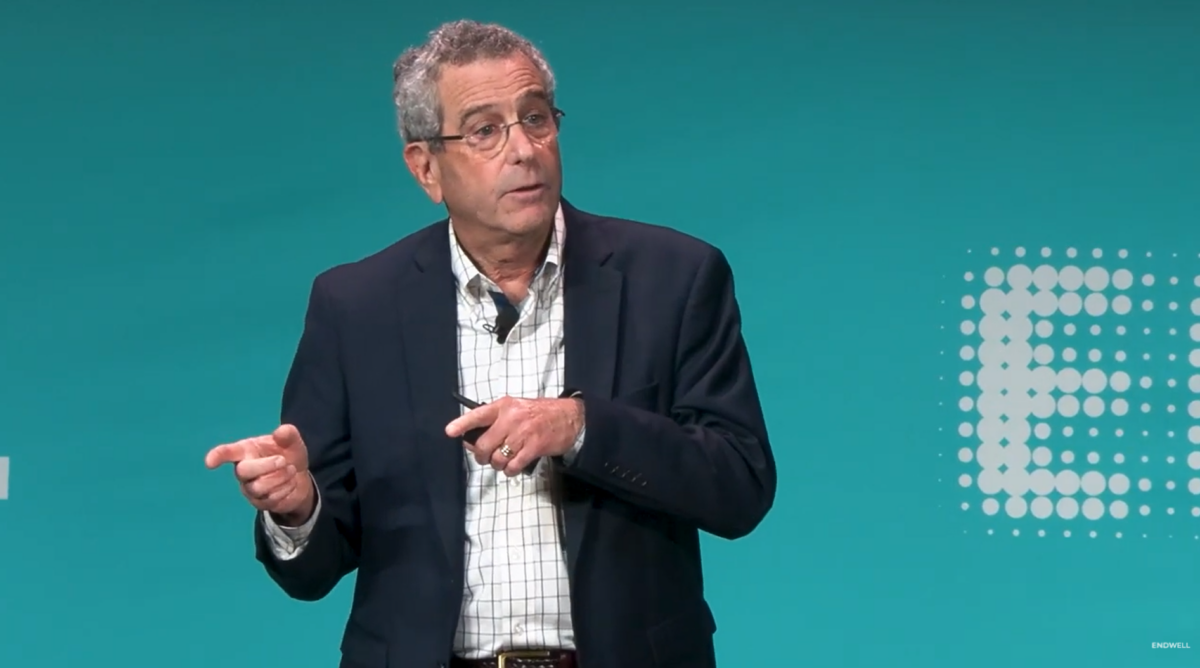
Screenshot of End Well's video on YouTube: https://www.youtube.com/watch?v=rtGggNFH4Pc

Ira Byock, M.D., on the Crisis in Hospice Care

The creation of the modern hospice movement was a major advance in the care for people with terminal illnesses. Alas, in recent years, hospice has entered something of a crisis, with too many facilities offering inadequate care and some patients receiving short shrift of services to which they are entitled. To get to the bottom of the problem, Wesley invited Read More ›

close-up-of-hands-stockpack-adobe-stock-392089525-stockpack-adobe_stock
Close-up of hands
Image Credit: Photographee.eu - Adobe Stock

Will We Starve Dementia Patients in Slow Motion?

Moves are afoot in bioethics to require caregivers to withhold food and water by mouth from a patient made incompetent by dementia if that patient, while compos mentis, has signed such a request — and even if the patient willingly eats, enjoys meals, or asks for food. It is sometimes called “voluntary stop eating and drinking [VSED] by advance directive,” in the parlance.

I have frequently criticized VSED by directive as inhumane to the patient, cruel to caregivers (as it forces them to starve people to death), and designed to open the door to lethally jabbing those with advanced dementia as the less onerous alternative to their being made to starve to death.

Now, as supposedly some form of compromise, there is a proposal on the table to barely feed — i.e., malnourish — dementia patients who have previously signed such a directive. From, “Mr. Smith Has No Mealtimes,” published in the Journal of Pain and Symptom Management (citations omitted):

Minimal Comfort Feeding (MCF)…is the provision of only enough oral nutrition and hydration to ensure comfort. With MCF, eating and drinking is not scheduled; rather, caretakers offer food and liquids only in response to signs of hunger and thirst. Patients are neither wakened for regular mealtimes nor encouraged to eat or drink. Instead, they are offered frequent, fastidious mouth care, continued social contact, therapeutic touch, sensory distraction, and medications to relieve distress associated with apparent thirst or hunger before being provided with minimal amounts of liquid or food.

Read More ›
hospice-nurse-helps-old-lady-with-mobile-phone-call-stockpack-adobe-stock
Hospice Nurse Helps Old Lady With Mobile Phone Call
Image Credit: Diego Cervo - Adobe Stock

Hospice and Palliative Nurses Association Plans to Surrender to Assisted-Suicide Agenda

When Dame Cecily Saunders created the modern hospice movement, she adamantly rejected assisted suicide as an acceptable hospice activity. Saunders would be spinning in her grave if she read the proposed policy around assisted suicide that has been published by the Hospice and Palliative Nurses Association (HPNA). Read More ›