Humanize From Discovery Institute's Center on Human Exceptionalism
Topic

assisted suicide

hands-doctor-and-writing-prescription-at-hospital-in-office-1879443944-stockpack-adobestock
Hands, doctor and writing prescription at hospital in office, documents and recommendation with advice. Person, medical professional and paperwork for medicine, report and administration at clinic
Image Credit: WesJVR/peopleimages.com - Adobe Stock

Americans Are of Two Minds About the “Moral Acceptability” of Suicide

Gallup just issued its annual poll on “moral acceptability.” I was struck by the dramatically different results in the two questions about suicide.

The first question asked about “doctor assisted suicide.” Close to a majority, 49 percent, of respondents answered that committing suicide with a doctor’s help is morally acceptable, while 45 percent responded that it is not.

The other question asked simply about the moral acceptability of “suicide.” Strikingly, only 21 percent said that it is morally acceptable to take one’s own life, while a whopping 70 percent said it is not. Indeed, suicide was one of the lowest “morally acceptable” behaviors in the entire poll. Only cloning humans, polygamy, and extramarital affairs had a lower moral acceptability rating.

That’s quite a paradox. So, what’s going on? Why the wide disparity in answering two questions that are about the same issue?

Read More ›
overhead-flat-lay-of-a-doctors-prescription-pad-a-stethoscop-1999539921-stockpack-adobestock
Overhead flat lay of a doctor's prescription pad a stethoscope and a small bottle of generic capsules on a bright clean wooden desk prescription writing clinical desk
Image Credit: Kateryna - Adobe Stock

New Jersey Doctor Has Legally Assisted About 200 Suicides

There is an old joke: What do you call the medical student who finished last in his class? Answer: “Doctor.”

The increasing legalization of assisted suicide has accorded that joke a disturbing pertinence. A doctor who prescribes poison need not be an excellent medical practitioner. He or she need not specialize in treating patients who present with particular life-threatening conditions, and indeed, can prescribe even if never treating the patient’s underlying condition at all.

For example, Jack Kevorkian was a pathologist who never treated a living patient after medical school. But if assisted suicide had been legal in his time, he would have been qualified to lethally prescribe. Along similar lines, before assisted suicide was legalized, the California death doctor Lonny Shavelson was a part-time ER doc who mostly pursued a career as a photojournalist and author.

Read More ›
medical-recovery-and-senior-man-in-hospital-bed-for-post-ope-1895779554-stockpack-adobestock
Medical, recovery and senior man in hospital bed for post operation healing or treatment. Healthcare, sick and sleeping with old person in ward of clinic for medicare or rehabilitation as patient
Image Credit: Azeemud25/peopleimages.com - Adobe Stock

Bioethicists: “Terminally Sedate” People Committing Suicide by Self-Starvation

In a newly released paper in the prestigious journal Bioethics, three prominent bioethicists argue that when someone decides to commit suicide via self-starvation and dehydration — known in euthanasia movement parlance as “voluntary stop eating and drinking” (VSED) — doctors should be allowed to “terminally sedate” the person trying to die when necessary to prevent intractable suffering. Patients who commit VSED are often not terminally ill. In fact, euthanasia organizations promote self-starvation to the elderly who are not dying and as a means of becoming eligible for assisted suicide where it is legal by making oneself “terminal” via lack of sustenance. VSED must be distinguished from the common circumstance when actively dying people stop eating. That’s a natural process and Read More ›

flowers-on-the-grave-stockpack-adobe-stock-626748138-stockpack-adobestock
flowers on the grave
Image Credit: HiroSund - Adobe Stock

Grieving Mother Dies at Swiss Suicide Clinic

The other day, I wrote about Wendy Duffy, a healthy woman in deep grief because of the death of her son, who was planning to die at a Swiss death clinic. Alas, Duffy apparently did the deed. From the New York Post story: The physically healthy British mom, irreparably heartbroken over the death of her only son, died by euthanasia in Switzerland on Friday. Wendy Duffy, 56, died at the Pegasos assisted suicide clinic in Basel, in what the controversial organization called a “sane suicide,” the Daily Mail reported. “I can confirm that Wendy Duffy, at her own request, was assisted to die on April 24 and that the procedure was completed without incident and in full compliance with her Read More ›

empty-hospital-bed-with-wilted-red-rose-symbolizes-loss-negl-1619059234-stockpack-adobestock
Empty hospital bed with wilted red rose. Symbolizes loss, neglect, loneliness, death, grief, and illness. Represents absence, despair, forgotten patients, and fragility of life in medical facilities.
Image Credit: miss irine - Adobe Stock

Suicide Clinic Helping Grieving Mother Die Promotes Death-on-Demand Culture

A grieving mother who is in good health has been accepted for termination by a Swiss suicide clinic. From the New York Post story: A physically healthy British woman heartbroken over the death of her only son is heading to Switzerland to end her own life at an assisted suicide clinic. Wendy Duffy, 56, attempted to take her own life after her son died four years ago — but is soon bound for Switzerland, where assisted suicide is legal, after her application was accepted by a clinic, according to the London Times. Duffy, a former care worker from the West Midlands, told the Daily Mail that she paid Pegasos, a Swiss assisted-dying nonprofit organization, $13,500 to euthanize herself under its Read More ›

2026NationalAgDayEventonMarch24202620260324-USDA-
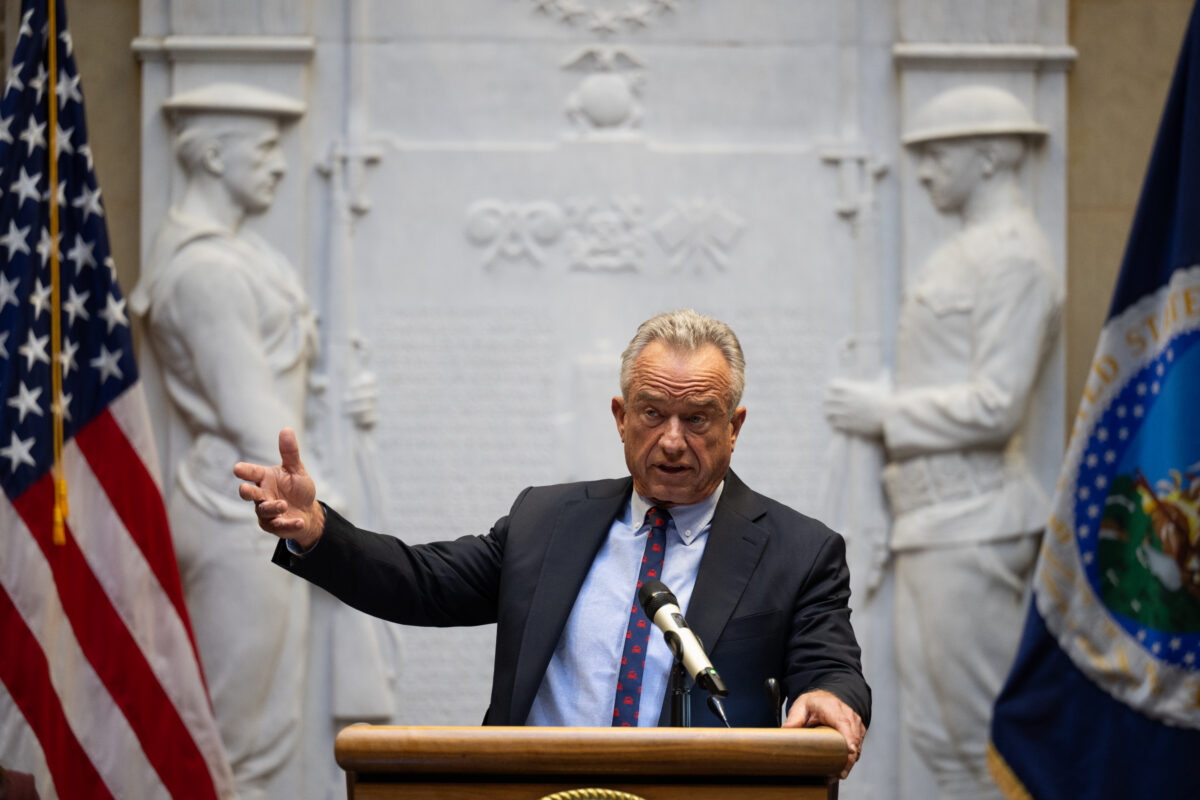
U.S. Department of Health and Human Services Secretary Robert F. Kennedy, Jr. delivers some remarks during the 2026 Ag Day celebration ceremony at the USDA Headquarters, Washington D.C., March 29, 2026. Ag Day is a time when producers, agricultural associations, corporations, universities, government agencies and countless others across America gather to recognize and celebrate the abundance provided by American agriculture. As the world population soars, there is even greater demand for the food, fiber and renewable resources produced in the United States. The National Ag Day program believes that every American should understand how food, fiber and renewable resource products are produced, value the essential role of agriculture in maintaining a strong economy, appreciate the role agriculture plays in providing safe, abundant and affordable products and acknowledge and consider career opportunities in the agriculture, food, fiber and renewable resource industries. Agriculture provides almost everything we eat, use and wear on a daily basis, and is increasingly contributing to fuel and other bio-products. Each year, members of the agricultural industry gather together to promote American agriculture. This effort helps educate millions of consumers. (USDA photo by Christophe Paul)
Public domain image from Wikimedia Commons: https://commons.wikimedia.org/wiki/File:2026_National_Ag_Day_Event_on_March_24,_2026_(20260324-USDA-OSEC-CDP-3412).jpg

RFK Jr. Calls Assisted Suicide Laws “Abhorrent”

Assisted suicide is not discussed much at the federal level. But at a recent Senate committee hearing, Senator James Lankford (R., Okla.) asked HHS Secretary Robert F. Kennedy Jr. about his thoughts on assisted suicide. Kennedy was unequivocal (starting at minute 3:30): Lankford: I want to switch to an issue we have not had a lot of time to talk about and that is assisted suicide. We now have three states, California, Colorado, and Vermont that disability groups are filing against some of the assisted suicide laws because it seems to target those with disabilities and the Americans with Disabilities Act passed in 1990, that act has worked to protect those with disabilities, not incentivize them to take their own Read More ›

a-depressed-woman-sitting-in-the-dark-room-stockpack-adobe-s-915548288-stockpack-adobestock
a depressed woman sitting in the dark room
Image Credit: ARBA - Adobe Stock

Mentally Ill Woman Accessed Assisted Suicide in Oregon

Most of the media are in the tank (remember Brittany Maynard?) for the assisted suicide/euthanasia agenda and, as a consequence, are primarily interested in reporting on stories of “good deaths.” That criticism does not apply to The Atlantic, which recently published a scathing exposé of the cruelties inherent in Canada’s euthanasia regime. Now, staff writer Elizabeth Bruenig has published an important piece detailing how a mentally ill 31-year-old woman named Eileen Mihich was able to access poison drugs by writing herself a fraudulent prescription for death, which was filled unquestioningly by a willing pharmacy.

Eileen apparently had no discernible diseases but complained about severe abdominal pain. From, “It Was Too Easy for Her to Kill Herself“:

Mihich had told her family that she was debilitated by a mysterious abdominal pain and was interested in a medically assisted death. But her suicide still shocked her two closest relatives: her cousin Sarah (who asked to be referred to by her first name, to protect her privacy) and aunt Veronica Torina…Nearly a year on, they are still trying to solve the mystery of her death.…

At the medical examiner’s office weeks later, they received her phone, her wallet, and pharmacy receipts for prescription drugs commonly used to end the lives of patients with untreatable illnesses.

They also learned that Mihich’s body bore no signs of illness. Mihich had been suffering, but she had not been on the verge of death.

Read More ›
F20250124AH-4078
President Donald J. Trump and First Lady Melania Trump meet with California Gov. Gavin Newsom after arriving on Air Force One at Los Angeles International Airport in Los Angeles, Friday, Jan. 24, 2025. (Official White House Photo by Andrea Hanks)
White House image at Wikimedia Commons: https://commons.wikimedia.org/wiki/File:F20250124AH-4078.jpg

Did Gavin Newsom Witness His Mother’s Murder?

California Governor Gavin Newsom is clearly running for president and — surprise, surprise — has a new memoir coming out. In an interview about the book, he recounted attending his mother’s hastened death. From the Washington Post story:

It was the spring of 2002 when Gavin Newsom’s mother, Tessa, dying of cancer, stunned him with a voicemail. If he wanted to see her again, she told him, it would need to be before the following Thursday, when she planned to end her life.

Newsom, then a 34-year-old San Francisco supervisor, did not try to dissuade her, he recounted in an interview with The Washington Post. The fast-rising politician was racked with guilt from being distant and busy as she dealt with the unbearable pain of the breast cancer spreading through her body.

Newsom’s account of his mother’s death at the age of 55 by assisted suicide, and his feelings of grief and remorse toward a woman with whom he had a loving but complex relationship, is one of the most revealing and emotional passages in the California governor’s book, “Young Man in a Hurry: A Memoir of Discovery,” which will be published Feb. 24.

Some call it assisted suicide, but it appears to have actually been homicide because she was lethally injected by a doctor:

Read More ›
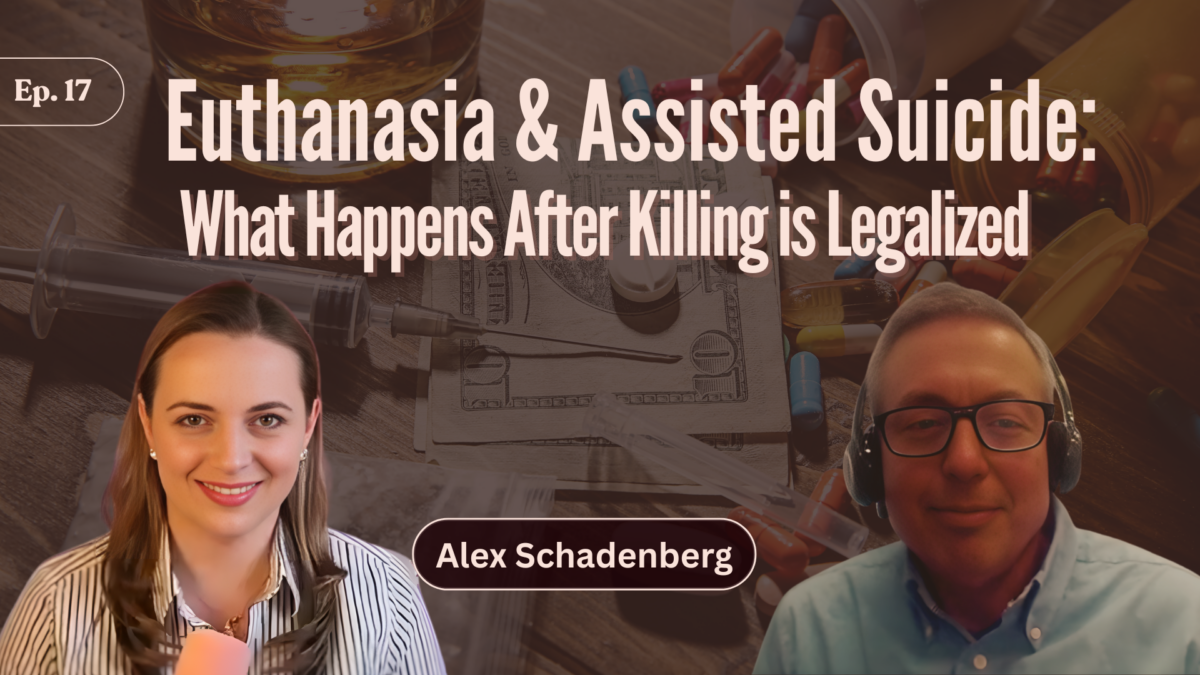
Episode 17 Thumbnail

What Happens After Killing Is Legalized: Inside Canada’s Euthanasia Experiment and Beyond with Alex Schadenberg

What happens after killing is legalized? In this episode of Bioethics Babe, I sit down with Alex Schadenberg, Executive Director of the Euthanasia Prevention Coalition, to examine what Canada’s euthanasia regime reveals about medicine, consent, and human dignity. Euthanasia and assisted suicide are often framed as compassion about choice, autonomy, and relief from suffering. But as Canada’s MAiD system shows, once killing becomes legal, safeguards collapse, definitions expand, and the most vulnerable people are placed at risk. In this conversation, we discuss: This is a difficult conversation, but a necessary one. If we redefine care as killing, what happens to medicine, trust, and our responsibility to protect one another? For Episode Resources, please visit the episode page here. For more Read More ›

senate-of-french-republic-interiors-decors-paris-france-stoc-1728828988-stockpack-adobestock
Senate of french republic, interiors decors, Paris, France
Image Credit: photogolfer - Adobe Stock

French Senate Rejects Assisted Suicide

The French Senate has said “Non” to legalizing assisted suicide. From the Le Monde story: The Sénat, the French Parliament’s upper house, on Wednesday, January 28, rejected a government-backed draft law on assisted dying that had been billed as one of the country’s most important societal changes in more than a decade. The law easily passed the lower Assemblée Nationale last year but was so watered down by right-wing and centrist lawmakers, in often angry and chaotic debate in the upper chamber, that supporters of the initiative said it no longer made sense. So, what did the “watering down” actually change that assisted suicide advocates rejected? The Le Monde story didn’t say. But the Christian Daily International story did: The Senate Read More ›